Ctrl K
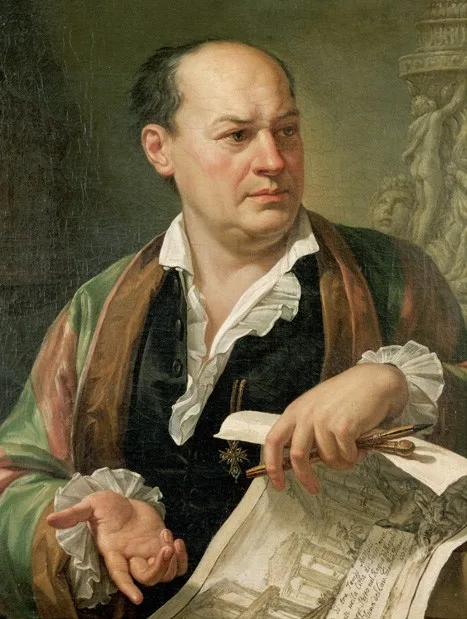
1720–1778
Movements
Occupations
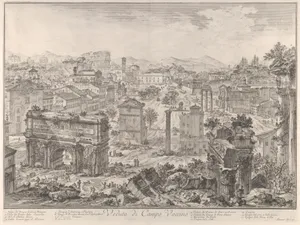
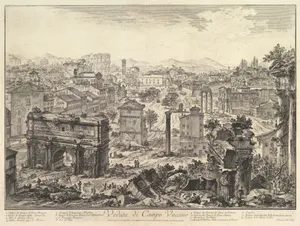
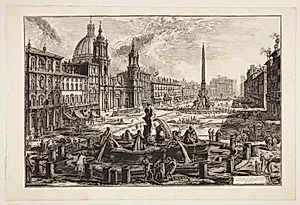
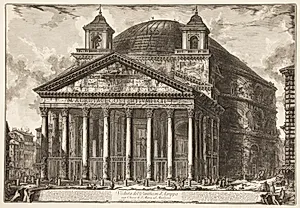
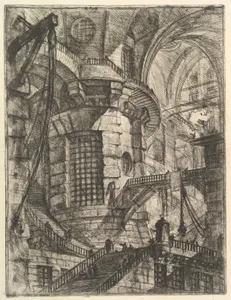
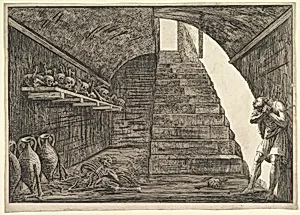
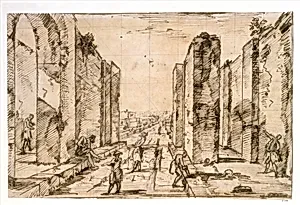
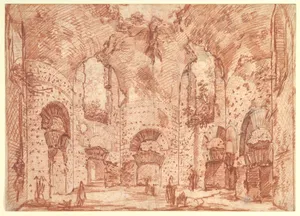
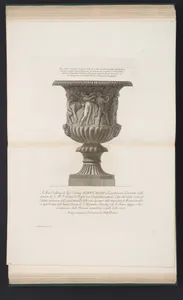
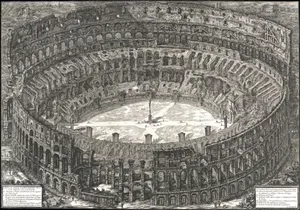
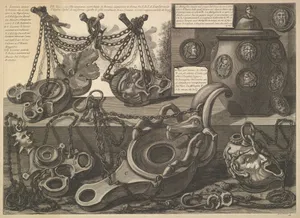
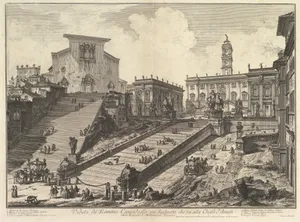
Giovanni Battista Piranesi (1720–1778) was an Italian printmaker, architect, and antiquarian whose visionary etchings of Rome and imaginary prisons revolutionized architectural representation and profoundly influenced both Neoclassicism and Romanticism. Piranesi stands as one of the most important printmakers of the eighteenth century, fundamentally shaping European perceptions of ancient Rome and architectural grandeur. His meticulously detailed etchings transcended mere documentation to become influential works of art that defined how generations viewed classical antiquity. His Vedute di Roma (Views of Rome) became so iconic that Goethe, who had studied Rome through Piranesi's prints, found the actual city somewhat disappointing upon first visiting. These images served as essential references for architects and scholars while functioning as the most sought-after souvenirs for Grand Tour travelers. Born in Mestre near Venice on October 4, 1720, Piranesi received diverse training that would prove essential to his artistic development. His father was a stonemason, and he studied structural engineering with his uncle Matteo Lucchesi, who worked for the Venetian waterworks. He received thorough instruction in perspective construction and stage design, learning etching techniques from Carlo Zucchi. After moving to Rome in the 1740s, he studied under Giuseppe Vasi, who refined his skills in architectural etching. Though Piranesi always considered himself an architect, he never received major architectural commissions, channeling his architectural vision instead through printmaking. His career centered on the Vedute di Roma series, begun in the 1740s and continued until his death, eventually comprising 135 monumental prints that documented Roman monuments and contemporary cityscapes with unprecedented drama and precision. Piranesi's distinctive style employed innovative compositional devices including extremely low viewpoints, multiple vanishing points, and theatrical lighting to exaggerate scale and create dramatic impact. He developed advanced etching techniques, including improved line etching and ink dabbing methods that enhanced depth and produced striking contrasts between light and deep shadow. His most experimental work, the Carceri d'invenzione (Imaginary Prisons), created around 1745–1750 and later revised, depicted vast subterranean vaults with impossible stairs and massive machines—architectural fantasies that drew on his theatrical training while pushing the boundaries of spatial representation into nightmarish, sublime territory. Piranesi's influence proved extraordinarily far-reaching and enduring. He directly shaped Neoclassical architecture through personal contact with leading designers including Robert Adam, John Soane, and William Chambers, while his work provided the blueprint for the Roman revival style. Simultaneously, his Carceri inspired Romantic writers including Samuel Taylor Coleridge, Edgar Allan Poe, and Victor Hugo, prefiguring Surrealism's exploration of unconscious spaces. His impossible staircases and spatial paradoxes directly influenced M.C. Escher's twentieth-century works, while modern architects from Peter Eisenman to Rem Koolhaas have claimed him as a visionary forerunner. Piranesi died in Rome on November 9, 1778, leaving a legacy that continues to resonate across architecture, literature, and visual arts.
Wikidata/Wikimedia Commons
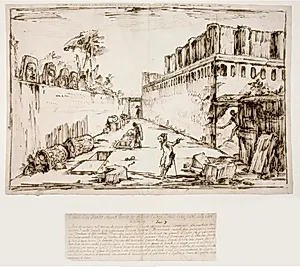


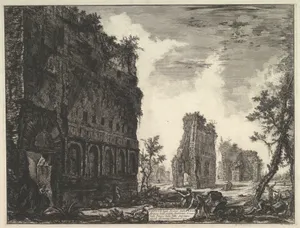
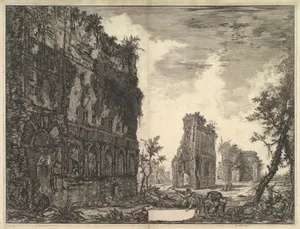
![Veduta degli avanzi del Castro Pretorio nella Villa Adriana a Tivoli (View of the Remains of the Praetorian Fort [the Poecile], Hadrian's Villa, Tivoli)](https://images.artheonmuseum.org/met/dp/thumb/veduta-degli-avanzi-del-castro-pretorio-nella-villa-adriana-a-tivoli-view-of-the-366154.webp)