Ctrl K
1831–1903
Movements
Occupations
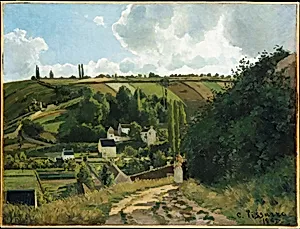
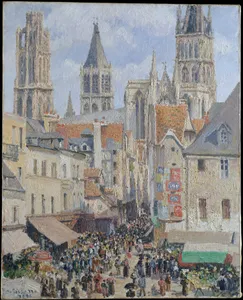
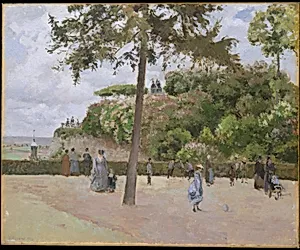
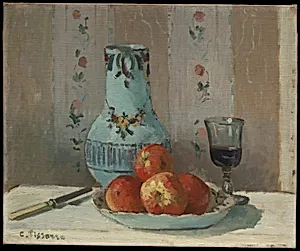
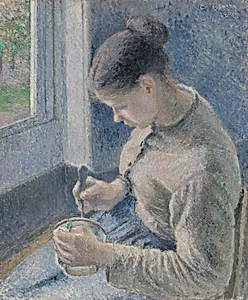
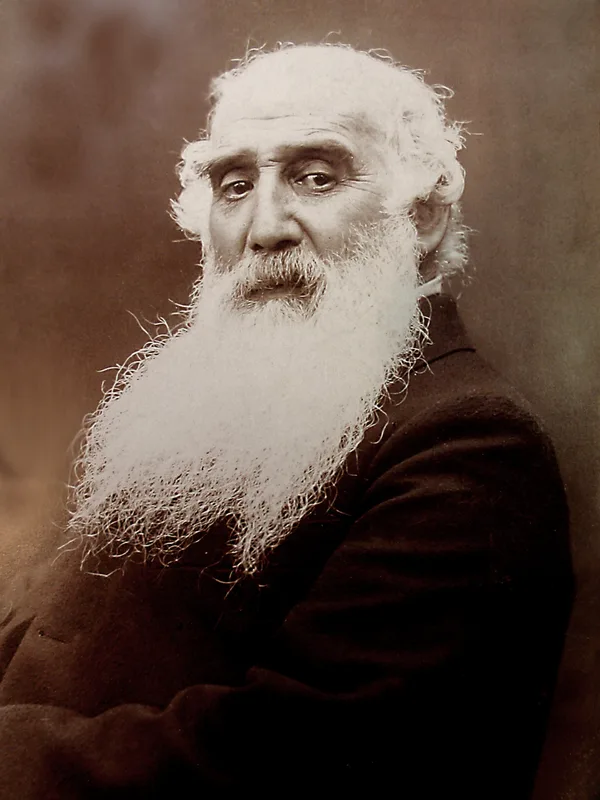
Camille Pissarro (1830-1903) stands as the patriarch of Impressionism, the only artist to exhibit in all eight Impressionist exhibitions and a mentor whose influence shaped the trajectory of modern art. Born Jacob Abraham Camille Pissarro on the Caribbean island of St. Thomas to a Jewish-Portuguese merchant family, he abandoned the family business to pursue painting, eventually settling in Paris in 1855. Art historian John Rewald called Pissarro the 'dean of the Impressionist painters,' not only because he was the oldest of the group but 'by virtue of his wisdom and his balanced, kind, and warmhearted personality.' This nurturing disposition made him the movement's essential catalyst—he helped organize the first Impressionist exhibition in 1874, maintained friendships with difficult personalities like Degas and Cézanne, and mentored virtually every major figure of the next generation. Pissarro's artistic contributions went beyond organizational leadership. His landscapes of rural France, painted with atmospheric sensitivity and structural rigor, established a balance between observed light effects and compositional solidity that distinguished his work from more purely optical Impressionism. His adoption of Neo-Impressionist techniques in the 1880s demonstrated his commitment to remaining at art's cutting edge throughout his career. Most significantly, Pissarro served as artistic father to the Post-Impressionists. Paul Cézanne, three years after Pissarro's death, identified himself in a retrospective exhibition as 'Paul Cézanne, pupil of Pissarro.' He also influenced Vincent van Gogh, Paul Gauguin, and Georges Seurat. Through these relationships, Pissarro created a vital bridge between 19th-century Realism and 20th-century modernism, making his body of work foundational to the development of French painting.
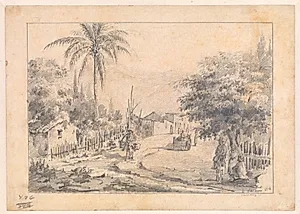
After abandoning the family hardware business in St. Thomas and spending several years painting in Venezuela with Danish artist Fritz Melbye, Pissarro settled in Paris in 1855.
He studied at the École des Beaux-Arts and Académie Suisse, where he met Paul Cézanne. His early work showed strong influence from Realist landscapists Jean-Baptiste-Camille Corot, Gustave Courbet, and Jean-François Millet.
Pissarro exhibited at the official Salon beginning in 1859 and participated in the Salon des Refusés in the 1860s, establishing his reputation as an avant-garde landscape painter committed to direct observation of nature.
This decade produced Pissarro's greatest work and saw the birth of Impressionism as an organized movement. Fleeing to London during the Franco-Prussian War (1870-1871), he met Claude Monet and together they studied the work of Turner and Constable.
Returning to France, Pissarro settled in Pontoise and began his close collaboration with Paul Cézanne, who learned the Impressionist style by painting alongside him. This mentorship proved pivotal to Cézanne's development.
Pissarro was instrumental in organizing the first Impressionist exhibition in 1874, helping establish a charter based on a local bakers' cooperative. Works from this period like 'Hoar Frost, the Old Road to Ennery, Pontoise' (1873) show his mastery of atmospheric effects combined with structural composition.
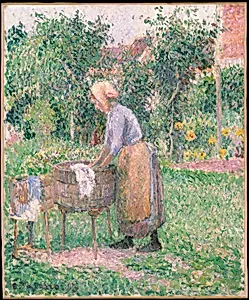
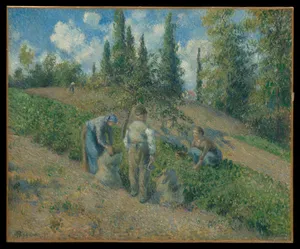
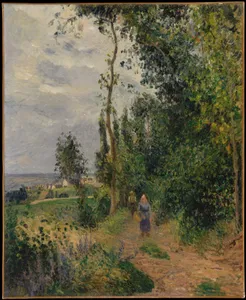
By alternating broken brushstrokes with thicker passages of paint, Pissarro created atmospheric conditions while maintaining underlying compositional solidity, fixing his gaze on farms, quiet towns, and rural laborers.
Seeking to maintain his avant-garde position as Impressionism gained acceptance, Pissarro embraced the Neo-Impressionist techniques developed by Georges Seurat and Paul Signac.
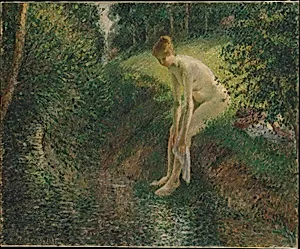
From 1885 to 1888, he practiced Pointillism—applying small patches of pure color to create the illusion of blended hues. Works like 'Hay Harvest at Eragny' (1887) demonstrate this more systematic, scientifically-grounded approach.
He also experimented with Japanese woodblock compositional techniques alongside Edgar Degas, adopting asymmetrical arrangements and dynamic angles that influenced his later work.
Though he eventually returned to a freer Impressionist style, this period demonstrated Pissarro's commitment to artistic evolution and his rejection of complacency.
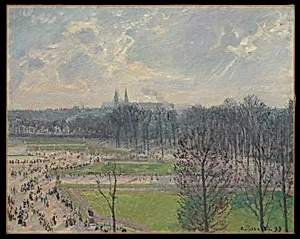
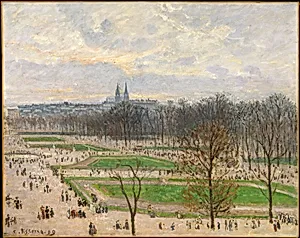
In his final decade, Pissarro synthesized his various experiments into a mature style of renewed confidence and freer brushwork. He returned to purer Impressionism but with greater technical mastery.
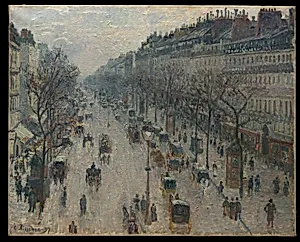
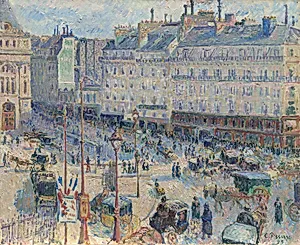
Eye infections forced him to work increasingly from windows and hotel rooms, leading to his celebrated series of Parisian boulevard views, including 'Boulevard Montmartre, Afternoon Sun' (1897).
Political turmoil including the Dreyfus Affair—during which his Jewish identity exposed him to anti-Semitism even from former friends like Degas—influenced his later years. He briefly exiled himself to Belgium in 1894.
Pissarro continued painting until his death from sepsis in Paris on November 13, 1903, leaving behind over 1,500 paintings and an unparalleled legacy of artistic mentorship.
Wikidata/Wikimedia Commons
Exhibition
Beautiful and misterious portraits
Exhibition
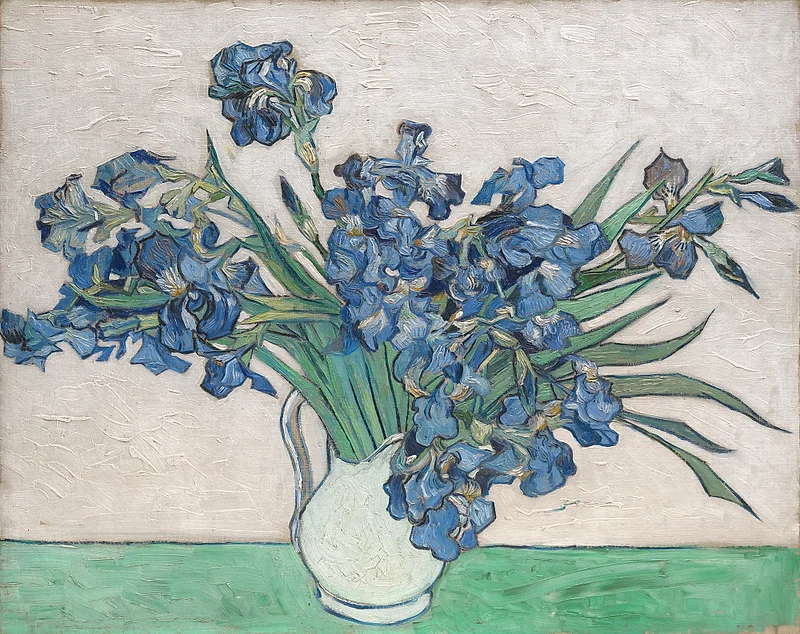
The revolutionary painters who broke every rule. This exhibition brings together masterworks by Monet, Degas, Cezanne, Van Gogh, Pissarro, and Sisley — the artists who transformed how we see color, light, and the everyday world.