Ctrl K
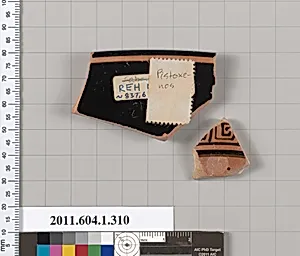
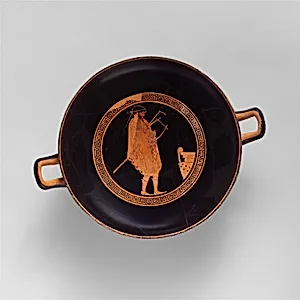
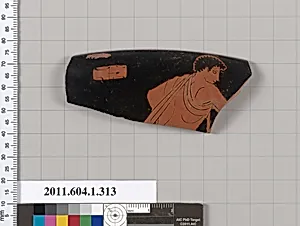
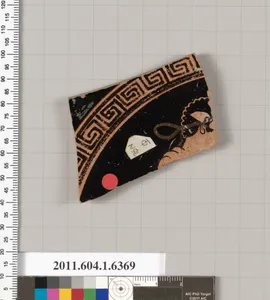
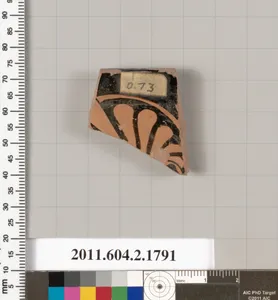
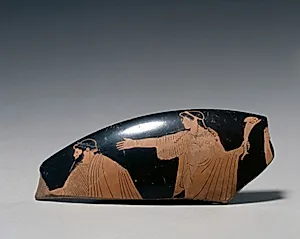
The Pistoxenos Painter was a prominent ancient Greek vase painter active in Athens during the early Classical period, from circa 480 to 460 BC. He trained as a pupil of the Antiphon Painter in the workshop of the potter Euphronios, where he honed his skills amid one of Athens' leading pottery production centers. The Pistoxenos Painter collaborated with potters such as Pistoxenos—whose signature provides the artist's conventional name—and Euphronios, producing primarily kylikes (drinking cups) that bridged Late Archaic delicacy with the emerging rigor of Early Classical forms.
Specializing in the red-figure technique, he elevated cup painting with innovative white-ground lekythoi and bowls, introducing four-color polychromy using slips, paints, and gilding to mimic monumental frescoes. His style featured fluid lines, subtle shading, foreshortening, and dynamic compositions, often omitting relief contours in later works for a smoother, more painterly effect. Closely related stylistically to the Penthesilea Painter, he favored motifs of horses in motion, armored warriors, and Dionysiac thiasoi (processions), with kalos inscriptions praising beauties like Lysis, Glaukon, and Megakles. These elements captured the transitional elegance of post-Persian War Athens, blending grace with newfound monumentality.
Key works include his name vase, a skyphos in Schwerin signed by the potter Pistoxenos, depicting Iphikles learning music from Linos and Heracles with his Thracian servant Geropso. A white-ground bowl showing Aphrodite riding a goose (ca. 480 BC), unearthed at Kameiros on Rhodes, resides in the British Museum, while another white-ground kylix with Apollo and his raven libating (ca. 480 BC) graces the Delphi Archaeological Museum. The fragmentary "Bybax cup" in Taranto's Museo Nazionale portrays a serene satyr Bybax and maenad in dilute washes, evoking Polygnotan wall painting.
The Pistoxenos Painter's legacy endures as a pioneer of refined cup painting and technical innovation, influencing the shift toward classical realism in Attic ceramics. Attributions by connoisseur John Beazley, cataloged in ARV² (e.g., nos. 860–863), underscore over 50 vases, securing his place among Athens' elite red-figure masters. His works, blending intimacy and grandeur, offer vivid glimpses into sympotic life and mythology.