Ctrl K
1791–1837
Occupations
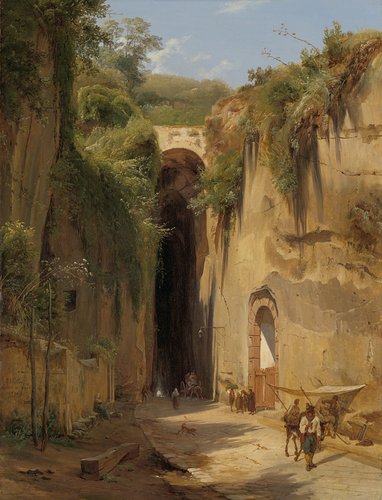
Antonie Sminck Pitloo (1791–1837) was a Dutch-born painter who became a pivotal figure in the development of Italian landscape painting in the early 19th century. After training in Paris under leading French landscape specialists, Pitloo settled in Naples in 1816, where he was appointed professor of landscape painting at the prestigious Neapolitan Academy. Working in the tradition of plein-air observation, he captured the distinctive light and atmosphere of the Neapolitan coastline with unprecedented freshness and immediacy. As a teacher, Pitloo profoundly influenced Italian landscape painting, founding the School of Posillipo in the 1820s with his students Giacinto Gigante and Achille Vianelli. This school revolutionized Italian landscape art by emphasizing direct observation of nature and atmospheric effects, anticipating later developments toward naturalism and Impressionism.
Born on April 21, 1791, in Arnhem, Netherlands (though some sources cite 1790), Antonie Sminck Pitloo showed early artistic inclinations. He traveled to Paris to pursue professional training, studying between 1808 and 1810 under two prominent French landscape painters: Jean-Joseph-Xavier Bidauld and Jean-Victor Bertin.
Both teachers were important figures in French landscape painting, working in the classical tradition of idealized, carefully composed views. Under their instruction, Pitloo learned the fundamentals of landscape composition, atmospheric perspective, and the rendering of natural forms. However, his mature work would move beyond their classical approach toward more direct, observed naturalism.
After completing his training, Pitloo traveled to Italy, the traditional destination for landscape painters seeking inspiration from classical sites and Mediterranean light. He was invited to Naples by Count Grigory Vladimirovich Orloff, a Russian diplomat and art patron who recognized his talent.
In 1816, Pitloo won the prestigious appointment as professor of landscape painting at the Neapolitan Academy, a position that provided him with both income and official recognition. This appointment was remarkable for a Dutch artist in Italy and testified to his abilities and his growing reputation.
Pitloo embraced Naples enthusiastically, so much so that he added an extra 'o' to his surname (originally Pitlo), as he was frequently mistaken for an Italian. In Italian, he became known as Antonio van Pitloo. He would spend the remainder of his life in Naples, dying there on June 22, 1837, at age forty-six.
Pitloo's most significant legacy was his role as founder and leader of the School of Posillipo, established in the 1820s. Posillipo was a scenic coastal area west of Naples known for its dramatic views of the bay and Vesuvius. Pitloo worked there extensively with his two most talented students, Giacinto Gigante and Achille Vianelli.
The School of Posillipo represented a revolution in Italian landscape painting. Rejecting both the idealized classical landscapes and the theatrical views common in Italian art, the school emphasized direct observation of nature, attention to atmospheric conditions, and the capture of light effects. They worked extensively en plein air, painting outdoors to capture the changing qualities of Mediterranean light.
Pitloo's approach influenced a generation of Italian landscape painters, helping to establish Naples as a center for progressive landscape painting in the 1830s and 1840s. His emphasis on observed reality and atmospheric effects anticipated the later development of naturalism and, ultimately, Impressionism in European art.
Artheon Research Team
Last updated: 2025-11-09
Biography length: ~479 words
Wikidata (CC0); Getty ULAN (ODC-By)