Ctrl K
1914–1995
Polly Duncan (1912–1983) was an American painter whose career flourished amid the New Deal art programs of the 1930s and 1940s. Born on September 22, 1912, in Lincoln, Nebraska, as one of four children of Fred and Mabel Duncan, she grew up in Denver after her family relocated there. At East High School, her artistic gifts were already evident; she served as president of the Two Arts Club and counted among her classmates the future muralists Jenne Magafan, Ethel Magafan, and Edward Chavez. She studied art with teacher Helen Perry, who exposed students to modernist influences and local figures such as Frank Mechau.
In the mid-1930s Duncan came under the mentorship of the established Coloradan muralist Frank Mechau, whose work celebrated the grandeur of Western landscapes. She joined a circle of young artists living in a cottage in Redstone, Colorado, and assisted Mechau on his projects during the winter of 1936. Along with the Magafan sisters and Chavez, she helped him execute federal mural commissions. Duncan later maintained ties to the Broadmoor Art Academy in Colorado Springs, where she continued to refine her skills in a regionalist tradition that emphasized American Scene painting and documentary accuracy.
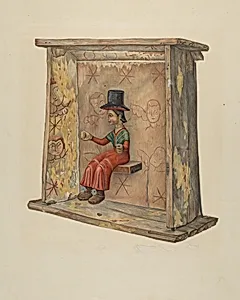
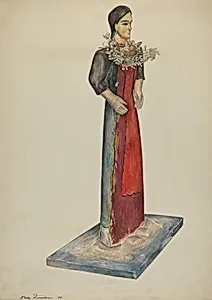
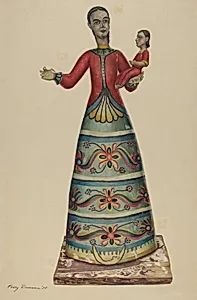
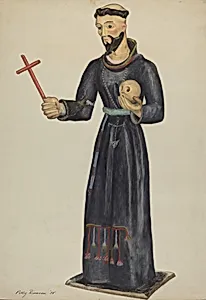
Duncan’s surviving works reveal a dual focus on Southwestern folk culture and everyday Western life. For the Index of American Design she produced meticulous watercolors of New Mexican santos, including *Nuestra Señora* (1938) and several *Santo (Bulto)* studies (1938–c. 1939), now in the National Gallery of Art. Her 1938 oil *Valley Farm* further demonstrates her command of rural subjects. The centerpiece of her public career is the oil-on-canvas mural *Cattle Round-Up* (1942), commissioned by the Section of Fine Arts for the Winnemucca, Nevada, post office; it vividly portrays cowboys herding Hereford cattle against the Nevada landscape, embodying the New Deal goal of celebrating local industry and identity.
During World War II Duncan served in the U.S. Marines. She spent her later years in Colorado Springs and died on October 10, 1983, and was buried at Fort Logan National Cemetery in Denver. Though her output was modest, her watercolors and mural remain valued documents of both Hispanic folk art and the ranching heritage of the Intermountain West, securing her place among the women artists who helped shape America’s public visual culture during the Depression.
All 4 artworks loaded