
Ctrl K
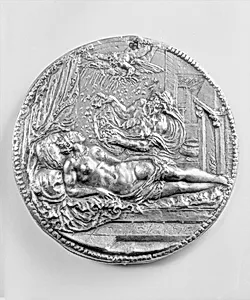
1533–1608
Pompeo Leoni (c. 1533–1608) was a distinguished Italian late Renaissance sculptor and medalist who spent the majority of his career as chief sculptor to the Spanish Habsburg court. Born in Milan, he followed in the footsteps of his father Leone Leoni, one of the era's most celebrated medallists and sculptors. Pompeo's arrival in Spain in 1556 with a series of imperial portraits marked the beginning of a five-decade career serving Spanish monarchs, primarily Philip II, for whom he created some of the most significant sculptural programs of the Spanish Renaissance. Pompeo's masterworks include the monumental bronze tomb sculptures of Emperor Charles V and King Philip II in the church of the Monastery of El Escorial, created in collaboration with Italian sculptor Jacopo Nizzolo da Trezzo and goldsmith Juan de Arfe. These funerary monuments represent pinnacles of late Renaissance sculpture in Spain, combining Italian sophistication with Spanish royal iconography. Beyond his sculptural achievements, Pompeo played an unexpected role in art history when he acquired Leonardo da Vinci's notebooks and manuscripts in 1589, which had been bequeathed to Francesco Melzi. Though Pompeo dismantled Leonardo's original codices to create separate collections, his preservation efforts ensured the survival of invaluable documents including the Codex Atlanticus.
Pompeo Leoni was born around 1533 in Milan to Leone Leoni, one of the most distinguished medallists and sculptors of the Italian Renaissance. Growing up in his father's workshop, Pompeo received exceptional training in both medal-making and large-scale sculpture, absorbing the sophisticated techniques and classical principles that characterized Italian Renaissance art.
Leone Leoni's international reputation and connections to the Habsburg court provided Pompeo with opportunities extending beyond Italy. The elder Leoni worked for Emperor Charles V and other Habsburg patrons, creating portrait medals and sculptural works that combined classical idealization with penetrating characterization.
Pompeo assisted his father on various projects during his youth and early career, developing skills in bronze casting, marble carving, and the creation of portrait medals that would serve him throughout his career.
On September 28, 1556, Pompeo arrived in Spain carrying a series of imperial portraits, marking the beginning of his permanent residence in the Iberian Peninsula. Philip II appointed him chief sculptor to the Spanish crown, a position Pompeo would hold for over five decades.
Pompeo's most significant commission was the monumental sculptural program for the royal tombs at the Monastery of El Escorial, Philip II's vast palace-monastery complex northwest of Madrid. Working with Italian sculptor Jacopo Nizzolo da Trezzo and Spanish goldsmith Juan de Arfe, Pompeo created the bronze tomb sculptures of Emperor Charles V and King Philip II, masterpieces of late Renaissance funerary art.
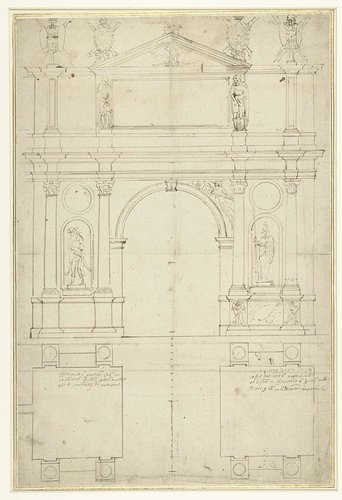
In 1570, Pompeo produced large-scale sculptural decorations for the wedding of King Philip II and Anna of Austria, demonstrating his ability to create elaborate temporary and permanent works for royal ceremonies and celebrations.
In 1589, Pompeo acquired the notebooks, manuscripts, and drawings that Leonardo da Vinci had bequeathed to his pupil Francesco Melzi. Though Pompeo dismantled the original manuscripts to create two separate collections, this controversial act of reorganization resulted in the preservation of crucial documents, including the Codex Atlanticus, now housed in the Biblioteca Ambrosiana in Milan.
Pompeo Leoni died on October 13, 1608, in Madrid, having spent fifty-two years in Spanish royal service. His workshop and artistic legacy significantly influenced Spanish sculpture, introducing Italian Renaissance principles while adapting to Spanish religious and royal iconographic requirements.
Artheon Research Team
Last updated: 2025-11-09
Biography length: ~478 words
![Ercole II d'Este, 1508-1559, 4th Duke of Ferrara 1534 [obverse]](https://images.artheonmuseum.org/nga/thumb/ercole-ii-deste-1508-1559-4th-duke-of-ferrara-nga-45125.webp)
![Patience [reverse]](https://images.artheonmuseum.org/nga/thumb/patience-reverse-nga-45126.webp)