
Ctrl K
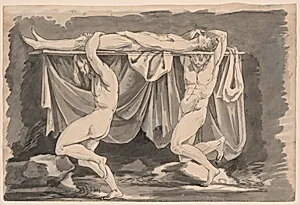
1755–1834
**Prince Hoare (1755–1834)** was an English painter, art critic, dramatist, and librettist whose multifaceted career bridged the visual arts and literature in late Georgian Britain. Born in Bath as the younger son of the prominent portrait painter William Hoare RA, he was named after his uncle, the sculptor Prince Hoare the elder. He studied under his father from an early age and quickly established himself as a painter of portraits and historical scenes.)
Hoare worked within the established traditions of British portraiture and history painting, influenced by his father’s neoclassical leanings and the broader Royal Academy circles. He exhibited at the Society of Artists, where he won a premium, and maintained close ties to the Royal Academy, serving as its Secretary for Foreign Correspondence. His sister, Mary Hoare, was also a noted painter, underscoring the family’s artistic legacy.
Beyond painting, Hoare became a leading voice in art criticism and debate. His influential 1806 publication, *Inquiry into the Requisite Cultivation and Present State of the Arts of Design in England*, addressed the state of British art education and institutions. He later turned increasingly to the stage, authoring around twenty plays, including the comedies *The Three and the Deuce* (1795) and *Indiscretion* (1800). In 1820 he compiled the *Memoirs of Granville Sharp*, drawing on the abolitionist’s papers and materials from the African Institution.)
Hoare’s legacy lies in his energetic promotion of the arts across disciplines during a pivotal era of institutional growth in Britain. Active until his death in Brighton in 1834, he helped shape conversations around artistic training, criticism, and public engagement that resonated well into the nineteenth century. His surviving works—primarily drawings, prints, and theatrical writings—continue to illuminate the interconnected worlds of painting and performance in Georgian England.
All 1 artworks loaded