
Ctrl K
1755–1840
George Jamesone (c. 1587–1644), Scotland's first eminent portrait painter, was born in Aberdeen to stonemason Andrew Jamesone and Marjory Anderson. He attended Aberdeen Grammar School on Schoolhill and likely pursued further studies at Marischal College. Jamesone completed his apprenticeship in 1618 under the supervision of his uncle, John Anderson, a noted decorative painter in Edinburgh. Establishing studios in both Aberdeen—opposite St. Nicholas Kirk—and on Edinburgh's Royal Mile near John Knox House, he built his reputation painting portraits of local academics and scholars from King's and Marischal Colleges.
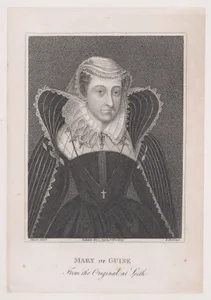
Dubbed "the Scottish Van Dyck," Jamesone worked in the portrait tradition, capturing the Scottish gentry with a flair influenced by continental masters. His career peaked during Charles I's 1633 visit to Edinburgh, when he designed an elaborate triumphal arch adorned with portraits of all past Scottish kings and painted the king himself, earning a ring from the monarch's finger. Among his finest works are the portrait of Mary Erskine (National Galleries of Scotland), Lady Janet Stewart, and his self-portrait (c. 1642, also National Galleries of Scotland). A painting attributed to Jamesone depicting Mary, Queen of Scots—later misidentified as Mary of Guise—was reproduced as a stipple engraving by Edward Harding in John Pinkerton's 1797 *The Scottish Gallery*.
Jamesone married Isabella Tosche; though they had several children, only their youngest daughter, Mary Jamesone, survived to adulthood, inheriting her father's talents and creating notable needlework panels in Aberdeen's St. Nicholas Kirk. His legacy endures as the pioneer of professional portraiture in Scotland, training influential pupils like John Michael Wright, who advanced British portrait painting in the 17th century. Jamesone's elevation of Scottish art from decorative trades to fine portraiture laid foundational work for later generations, cementing his status during a formative era.
All 1 artworks loaded