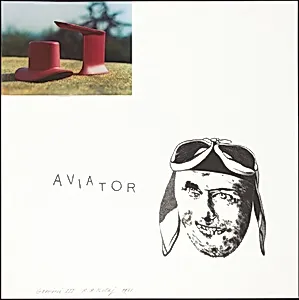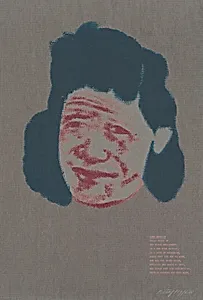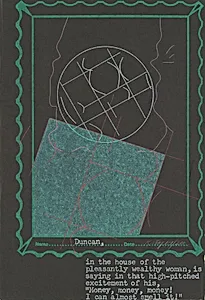
Ronald Brooks Kitaj (1932–2007), known professionally as R. B. Kitaj, was an American-born painter who spent the greater part of his career in England and became one of the most intellectually ambitious figurative artists of the postwar era. Born in Chagrin Falls, Ohio, Kitaj led an itinerant early life that included a stint as a merchant seaman before he turned to formal art education. He studied at the Academy of Fine Arts in Vienna and at Cooper Union in New York before traveling to Oxford, where he attended the Ruskin School of Drawing and Fine Art under Percy Horton. He then enrolled at the Royal College of Art in London (1959–61), studying alongside a remarkable cohort that included David Hockney, Derek Boshier, Allen Jones, and Patrick Caulfield. Though Kitaj's work preceded Pop Art in several respects, his influence on his peers — particularly his use of fragmented imagery, literary allusion, and collage-like composition — helped define that generation's visual language.
Kitaj's paintings are dense with references to political history, literature, Jewish identity, and art history, assembled through a montage practice he described as "agitational usage." His figures are rendered with a draughtsmanship widely compared to that of Degas, occupying disorienting pictorial spaces that resist narrative resolution. The Autumn of Central Paris (After Walter Benjamin) (1972–73) is among his most celebrated works, weaving together personal, political, and philosophical threads into a single unsettling image. In 1976, he curated the influential exhibition "The Human Clay" at the Hayward Gallery in London, where he coined the term "School of London" to describe a loose grouping of figurative painters including Frank Auerbach, Leon Kossoff, and Francis Bacon.
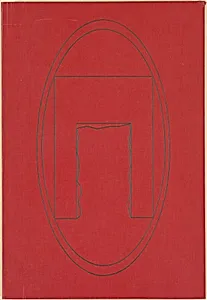
Kitaj's later work was increasingly marked by his engagement with Jewish identity and the experience of diaspora. In 1989 he published First Diasporist Manifesto, a book exploring his sense of cultural displacement and its relationship to art-making. In 1985 he became the first American since John Singer Sargent to be elected to the Royal Academy, and in 1982 he was elected to the American Academy of Arts and Letters. After a bruising critical response to his 1994 Tate retrospective, Kitaj moved to Los Angeles, where he continued to paint until his death in 2007. His legacy as a draftsman, theorist, and champion of figurative painting in the age of abstraction remains formidable.