Ctrl K
1873–1915
R. W. Martin and Brothers, often known simply as the Martin Brothers pottery, was a pioneering British studio founded in 1873 by sculptor Robert Wallace Martin (1843–1923) in Fulham, London, alongside his brothers Charles Douglas Martin (1846–1910), Walter Fraser Martin (1857–1912), and Edwin Bruce Martin (1860–1915). The firm relocated to a former soap factory on Havelock Road in Southall, Middlesex, in 1877, where it produced distinctive stoneware until around 1914, with limited output continuing until 1923. Charles managed their retail shop in High Holborn, while the others handled production: Robert as the primary modeller, Walter as the technical specialist in glazes and wheel-throwing, and Edwin as the master thrower and decorator of floral and marine motifs.
The brothers' training laid the foundation for their innovative approach. Robert Wallace apprenticed as an architectural sculptor with J. B. Phillips on Vauxhall Bridge Road and studied drawing at Lambeth School of Art, later attending the Royal Academy Schools; Walter and Edwin also trained at Lambeth School of Art and gained practical experience at the Royal Doulton Pottery in Lambeth. Rejecting industrial mass-production, they crafted salt-glazed stoneware—fired at high temperatures with salt introduced to the kiln for a textured, matte-to-glossy finish in earthy tones of brown, green, grey, and blue. Their Martinware embodied a whimsical grotesque style, drawing from medieval European motifs, Japanese art, and the natural world, featuring incised and impressed designs of fantastical creatures that evolved toward Art Nouveau simplicity after 1900.
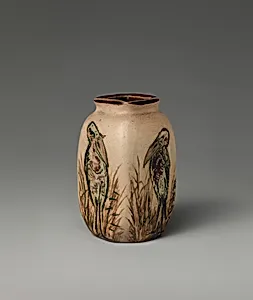
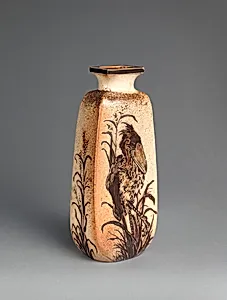
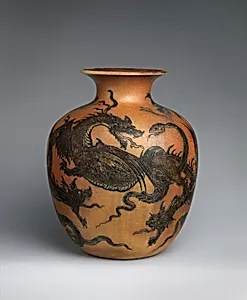
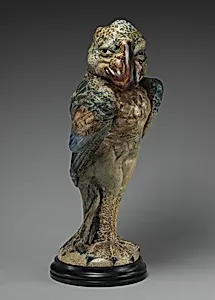
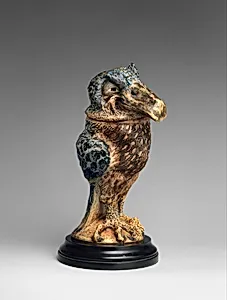
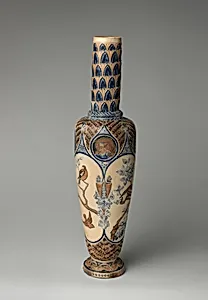
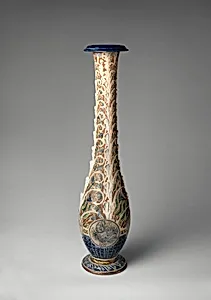
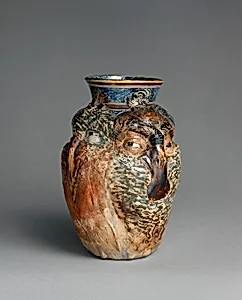
Iconic works include the "Wally Birds," oversized tobacco jars with detachable heads, fierce beaks, human-like eyes, and quizzical expressions—such as a 1888 jar (12 inches high) and a 1896 bird vessel (over 20 inches tall). Other masterpieces feature a 1876 vase with birds and portrait (23 inches), 1894 pot with dragons, 1905 small vase with birds, and 1904 tobacco jars, alongside sea monster match-holders and distorted "marred" pots inscribed with biblical quotes.
As precursors to the 20th-century British studio pottery movement, the Martin Brothers championed handmade artistry, producing unique, characterful pieces that remain highly sought after. Auction records exceed $200,000 for prime examples, with major collections at the Metropolitan Museum of Art, London Museum, and Plymouth's Box Museum, cementing their enduring legacy as masters of the bizarre and beautiful in Victorian art pottery.