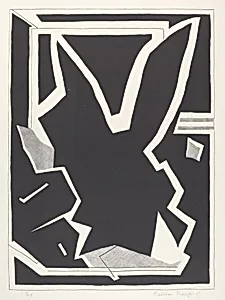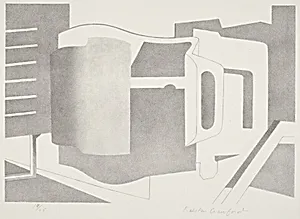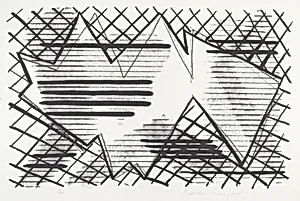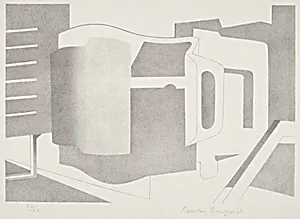
Ralston Crawford (1906–1978) was a Canadian-born American painter, printmaker, and photographer whose work stands as one of the most rigorous expressions of Precisionism in the twentieth century. Born in St. Catharines, Ontario, and raised in Buffalo, New York, he began formal art training at the Otis Art Institute in California in 1927 before moving on to the Pennsylvania Academy of the Fine Arts and the Barnes Foundation in Philadelphia. It was at the Barnes Foundation that Crawford encountered the work of Picasso and Matisse, an experience that would profoundly shape his visual sensibility. He later studied in Paris at the Académie Colarossi (1932) and the Académie Scandinave (1933).
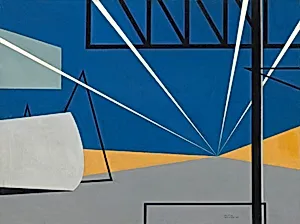
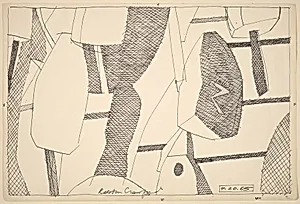
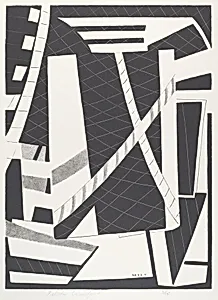
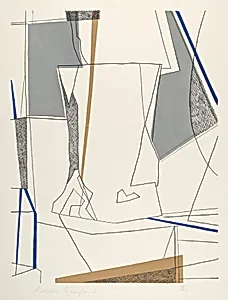
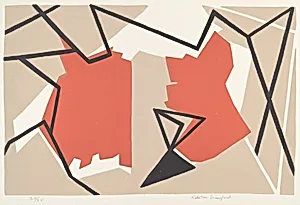
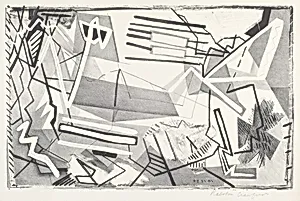
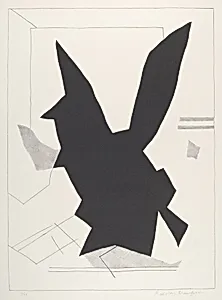
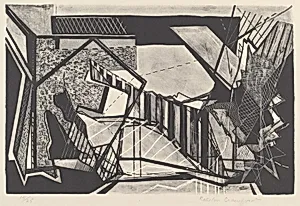
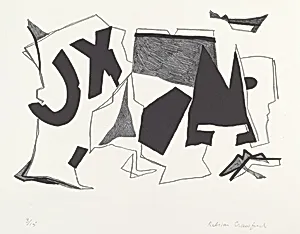
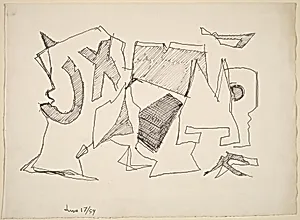
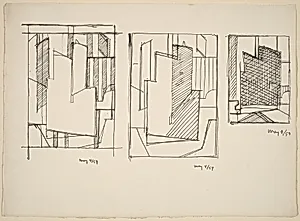
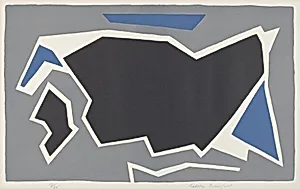
Crawford's early paintings aligned him with fellow Precisionists such as Charles Sheeler and Niles Spencer, capturing the American industrial landscape — bridges, grain elevators, factories, and shipyards — with hard-edged clarity and geometric precision. Works such as Maitland Bridge #2 (1938) and Lights in an Aircraft Plant (1945), now in the collections of the Museum of Fine Arts, Boston and the National Gallery of Art respectively, demonstrate his mastery of clean line, flattened plane, and luminous color. Over time his compositions moved away from literal representation toward an increasingly abstract geometry, while retaining the cool, structural logic that defined his vision.
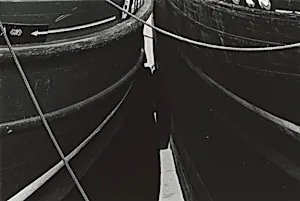
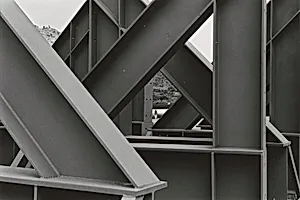
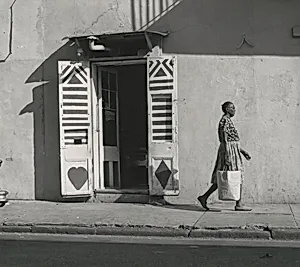
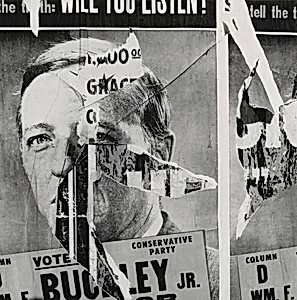
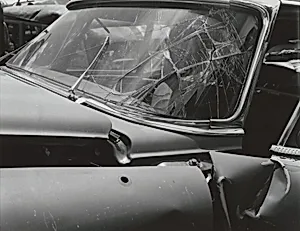
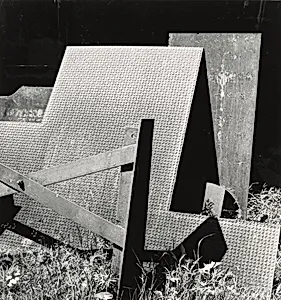
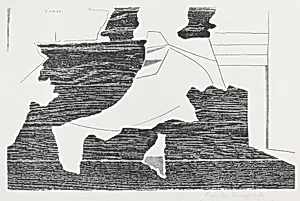
Beyond painting, Crawford was a gifted lithographer and photographer, and his wide-ranging curiosity led him to document subjects from jazz culture to atomic test sites at Bikini Atoll. He held a long teaching career at the Cincinnati Art Academy (now the Art Academy of Cincinnati), influencing successive generations of American artists. A retrospective at the Contemporary Arts Center in Cincinnati in 1971 helped cement his reputation as a central, if sometimes underappreciated, figure in American modernism. His work remains in the permanent collections of major institutions across the United States.