Ctrl K
1494–1533
Raphael de Mey was a German engraver active during the 16th century, with records indicating his death in 1630. Little is known about his early life or training, as biographical details remain sparsely documented. His works were published by the Cologne printer Johann Bussemacher, suggesting professional ties to the thriving printmaking hubs of the Rhineland.
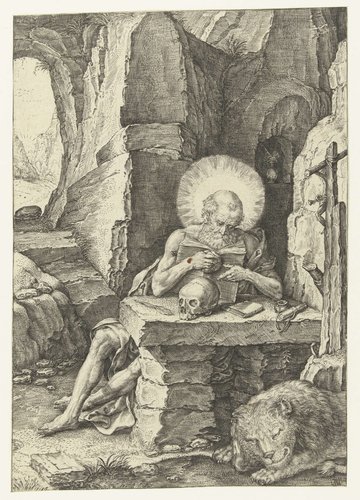
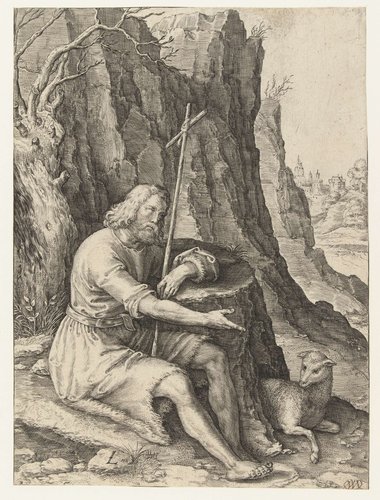
De Mey specialized in engravings that closely imitated the style of prominent Northern Renaissance masters, particularly the Netherlandish artist Lucas van Leyden (c. 1494–1533). His technique captured the intricate line work and dramatic compositions characteristic of early 16th-century Dutch printmaking, blending meticulous detail with a sense of narrative intensity. Notable among his preserved works is *Saint Jerome* (c. 1500/99), an engraving on ivory laid paper depicting the saint in contemplative solitude, rendered in direct imitation of van Leyden's manner. Other pieces include a 1590 reversed copy of Martin Schongauer's *St. Anthony Tormented by Demons*, as well as engravings of *John the Baptist in the Wilderness*, a *Pikeman* after Hendrick Goltzius, a *Drummer*, and *Saint Jerome in a Cave*.
Though not an innovator, de Mey's legacy endures through his role as a reproductive printmaker, helping disseminate the compositions of Renaissance greats to wider audiences across Europe. His engravings, held in collections like the Art Institute of Chicago and Rijksmuseum, exemplify the era's print culture, where imitation served both homage and commerce. Today, they offer valuable insights into the technical prowess and stylistic emulation that defined late 16th-century graphic arts.
All 3 artworks loaded