Ctrl K
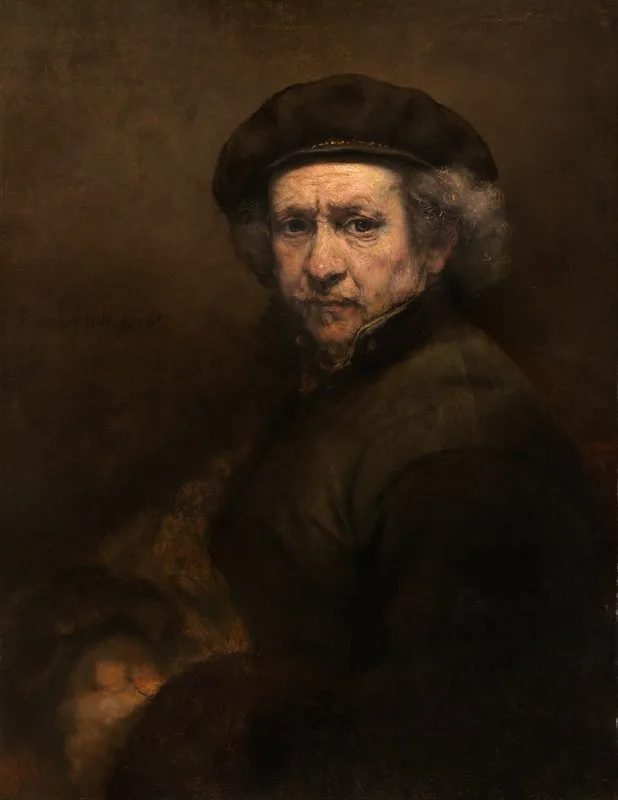
1606–1669
Movements
Occupations
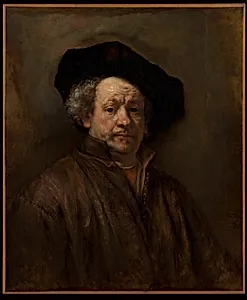
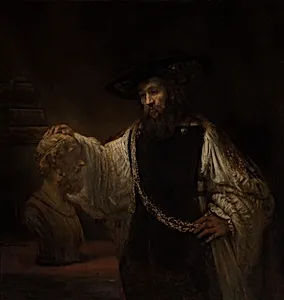
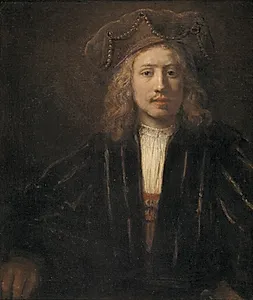
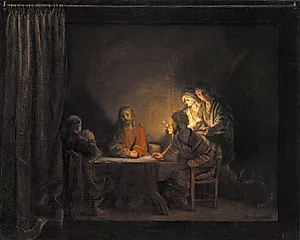
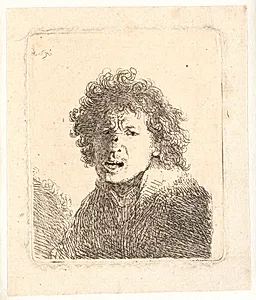
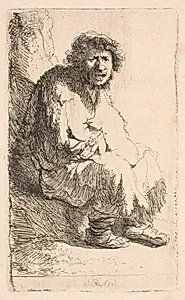
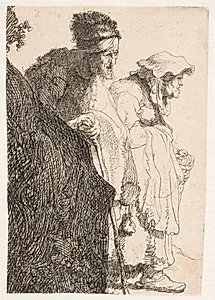
Rembrandt Harmenszoon van Rijn (1606–1669) stands as one of the greatest visual artists in the history of Western art and the most important Dutch painter of the 17th century. Born in Leiden to a prosperous miller's family, Rembrandt transformed painting through his revolutionary use of light and shadow, his psychological depth in portraiture, and his elevation of etching to a fine art. His approximately 300 paintings, 300 etchings, and hundreds of drawings encompass an extraordinary range of subjects—from grand historical and biblical narratives to intimate self-portraits that form an unparalleled visual autobiography spanning four decades. Rembrandt's genius lay in his ability to capture the inner life of his subjects with unprecedented humanity and compassion. His mastery of chiaroscuro—the dramatic interplay of light and dark—created theatrical effects that drew viewers into emotional narratives. Unlike many contemporaries who sought idealized beauty, Rembrandt found profound dignity in ordinary faces and aging bodies, revolutionizing portraiture by revealing character and psychology rather than mere appearance. Despite achieving fame and prosperity in his thirties, Rembrandt's later life was marked by financial ruin and personal tragedy. Yet his artistic powers only deepened with adversity, producing his most profound works in his final years. His influence extended through his workshop of over 50 pupils and continues to resonate through centuries of Western art.
Born on July 15, 1606, in Leiden as the ninth child of Harmen Gerritszoon van Rijn, a miller, and Neeltgen Willemsdochter van Zuijtbrouck, a baker's daughter. The family's prosperity enabled his education at the Latin School for seven years.
Briefly enrolled at Leiden University in 1620, possibly to study theology, but left to pursue art. Apprenticed for three years with local painter Jacob Isaacsz van Swanenburgh, learning fundamentals of painting.
In 1624, moved to Amsterdam for six months of crucial study under Pieter Lastman, the leading history painter of the era, who introduced him to Italian Baroque influences and dramatic narrative composition.
Returned to Leiden around 1625 and established an independent studio, sharing a workshop with fellow artist Jan Lievens. The two young painters gained attention from Constantijn Huygens, secretary to the Prince of Orange.
Moved permanently to Amsterdam around 1631, lodging with art dealer Hendrick van Uylenburgh. Met and married Uylenburgh's cousin Saskia in 1634, entering Amsterdam's prosperous merchant class.
Achieved unprecedented fame as a portrait painter, commanding high prices from Amsterdam's wealthy elite. Established a large workshop training numerous pupils, who paid 100 guilders annually for instruction.
Purchased a grand townhouse on Breestraat (now the Rembrandt House Museum) in 1639, filling it with an extensive art collection, antiquities, and curiosities that would later contribute to his financial troubles.
Completed 'The Night Watch' (1642), his most ambitious and famous work—a monumental group portrait that revolutionized the genre through its dynamic composition and dramatic lighting.
Suffered devastating personal losses: three of four children with Saskia died in infancy, and Saskia herself died in 1642 at age 30, leaving only their son Titus (born 1641).
Hendrickje Stoffels, engaged as housekeeper around 1649, became his common-law wife and frequent model. The church censured their relationship, as Saskia's will prevented Rembrandt from remarrying without losing her inheritance.
Artistic style evolved toward greater psychological depth and looser brushwork. Produced masterpieces including 'Bathsheba at Her Bath' (1654) and profound self-portraits exploring aging and mortality.
Financial difficulties mounted due to expensive collecting habits and declining portrait commissions as Dutch taste shifted toward the smoother Flemish style.
Declared bankruptcy in 1656; his house and remarkable collection—including works by Raphael, antiquities, and armor—were auctioned in 1657–1658. Moved to a modest rented house on the Rozengracht.
Hendrickje and Titus formed an art dealership employing Rembrandt to circumvent bankruptcy restrictions, allowing him to continue working.
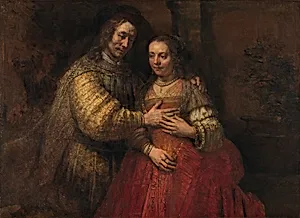
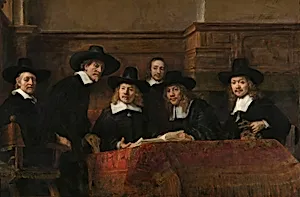
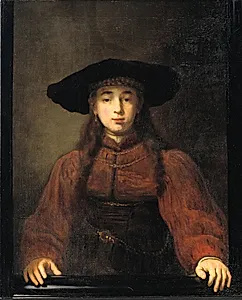
Produced his most profound late works despite adversity: 'The Jewish Bride' (c. 1665), 'The Syndics of the Drapers' Guild' (1662), and deeply moving late self-portraits.
Suffered the deaths of Hendrickje (1663) and Titus (1668). Died on October 4, 1669, in Amsterdam and was buried in an unmarked grave in the Westerkerk.
Artheon Research Team
Last updated: 2025-11-28
Biography length: ~1,150 words
Wikidata/Wikimedia Commons