
Ctrl K
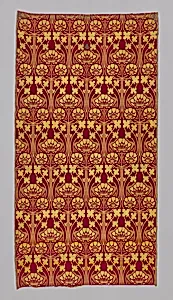
**René Beauclair (1877–1960)** was the artistic pseudonym of Ludovic-Jean-Joseph-Marie Popineau, a versatile French artist, architect, decorator, ceramist, sculptor, and painter. Born in the south of France, he lived and worked primarily in Toulouse and Castelnau-de-Montmiral, where he produced a wide range of decorative works. Beauclair emerged as a dedicated proponent of the Art Nouveau movement, creating flowing, organic designs suited to textiles, wallpaper, ceramics, jewelry, and glass.
His reputation was established early with the 1900 publication of *Dessins d’Ornementation plane en couleurs*, a influential collection of ornamental patterns that showcased his mastery of the style’s sinuous lines and natural motifs. He remained active between the wars, designing numerous war memorials and contributing prolifically to ceramic production. In the 1930s he created decorative pieces for the Odetta factory in Quimper, becoming one of its most productive artists during that period. Examples of his ceramics are held in the Musée de la Faïence in Quimper, while his paintings and other works appear in the Musée des Beaux-Arts in Gaillac.
Beauclair’s designs often featured vibrant floral and abstract patterns intended for practical applications such as wallpapers and fabrics. One notable surviving work is a decorative panel in the collection of the Minneapolis Institute of Art (Mia), exemplifying his Art Nouveau aesthetic.
Though details of his formal training remain undocumented, Beauclair’s legacy endures through his extensive output in multiple media and his role in sustaining Art Nouveau principles into the interwar years. His ceramics and pattern books continue to be studied and reproduced, highlighting his contribution to French decorative arts of the early twentieth century.