Ctrl K
Renée Stout, born in 1958 in Junction City, Kansas, was raised in Pittsburgh's East Liberty neighborhood from the age of one. Her family nurtured creativity: her mother practiced needlework, her father worked as a mechanic and steelworker who enjoyed tinkering, and an uncle pursued fine-art painting. As a child, she attended weekend classes at the Carnegie Museum of Art, where African sculptures like the nkisi nkondi profoundly impacted her at age ten. Stout earned her BFA from Carnegie Mellon University in 1980, training as a photo-realist painter in the styles of Edward Hopper and Richard Estes, producing depopulated urban street scenes that evoked spiritual containment. After graduation, she worked as a professional sign painter, honing trompe l'oeil techniques, before relocating to Washington, D.C., in 1985.
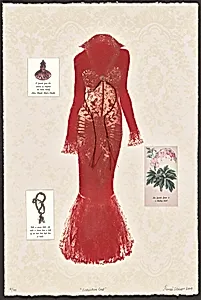
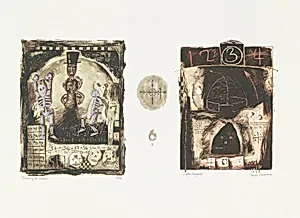
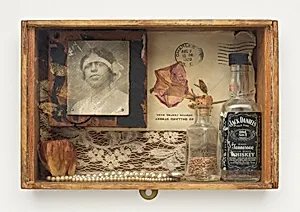
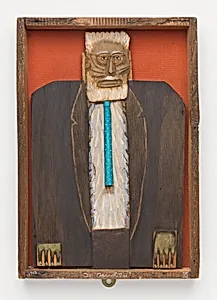
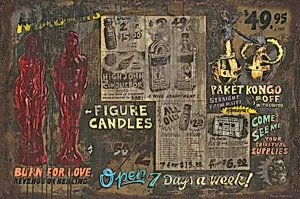
Stout's practice evolved into multifaceted assemblage sculptures, installations, paintings, and photographs rooted in African diasporic spirituality, Hoodoo, Vodou, and urban mysticism. Drawing from Kongo minkisi power figures first encountered in Pittsburgh, Yoruba sculpture, Haitian Vodou, and artists like Betye Saar, Joseph Cornell, and Edward Kienholz, she crafts narrative objects blending street culture, carnivalesque theater, and found materials into "divining tables" and mechanical fetishes. Central to her oeuvre is the alter ego Fatima Mayfield, a fictional Hoodoo herbalist and fortune-teller whose tableaux address self-healing, racism, addiction, and empowerment amid the African diaspora.
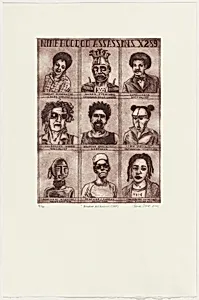
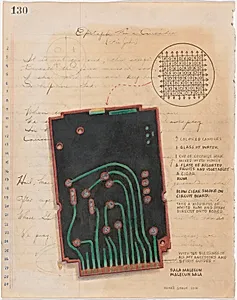
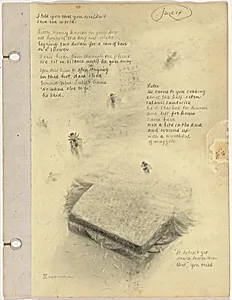
Key works include *Fetish #1* (1987), *She Kept Her Conjuring Table Very Neat* (1990), *The Colonel's Cabinet* (1991–1994), *Hoodoo Assassin #6 (The Chameleon)* (2019), and recent series like *Sketches on Old Paper* (2025). Her breakthrough came with the 1993 solo exhibition *The Eyes of Understanding: Kongo Minkisi and the Art of Renée Stout* at the Smithsonian's National Museum of African Art—the first by an American artist there—followed by shows at the Smithsonian American Art Museum and traveling installations like *Tales of the Conjure Woman* (2013–2016).
Stout's legacy endures through holdings in prestigious collections, including the National Gallery of Art, Smithsonian American Art Museum, National Museum of African American History and Culture, and High Museum of Art. Honored with the Louis Comfort Tiffany Foundation Award (1993, 2018), Joan Mitchell Award (2005), and Women's Caucus for Art Lifetime Achievement Award (2018), she continues bridging African ancestral traditions with contemporary American narratives, fostering reflection on identity and resilience.