Ctrl K
1855
Rex Dolmith, an American artist born on January 1, 1896, in East Canton, Ohio, pursued formal training at the Art Institute of Chicago, where he honed his skills in portraiture, architectural drawings, and landscapes. He further studied at the University of Colorado, broadening his artistic foundation before embarking on a multifaceted career that blended painting, design, teaching, and gallery management.
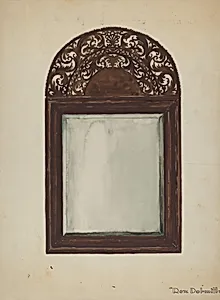
Dolmith emerged as a key figure in the Taos art scene, serving as a founding member and organizer of the Taos Art Association while operating a gallery there. He painted in the Fauvist style, characterized by bold colors and expressive brushwork, though his documented works also reveal a precise, illustrative hand suited to technical renderings. Active during the Great Depression, he contributed to the Federal Art Project's Index of American Design, a WPA initiative that cataloged everyday American objects through meticulous artwork. This period marked his collaboration on detailed studies of antique furniture, showcasing his versatility beyond Fauvism into graphic precision.
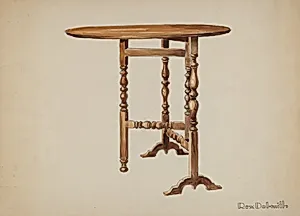
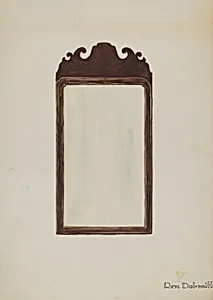
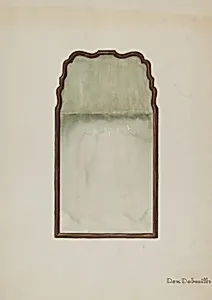
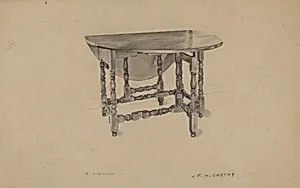
Among his major works from circa 1936 are watercolor, colored pencil, and graphite drawings such as *Looking-glass* (two variants), *Pier-glass*, *Gate-leg Table*, and *Three Legged Gate-leg Table*, now in the National Gallery of Art's collection. These pieces exemplify the Index project's goal of preserving cultural artifacts through art, blending historical accuracy with artistic interpretation. Dolmith's oeuvre also includes an untitled oil on canvas, reflecting his portrait and landscape specialties. His contributions endure in institutions like the Harwood Museum of Art in Taos, New Mexico, where his works affirm his role in regional modernism and American design documentation. Though his life details remain somewhat sparse post-1930s—possibly passing around 1955—Dolmith's legacy bridges fine art, craft illustration, and community-building in early 20th-century American creativity.