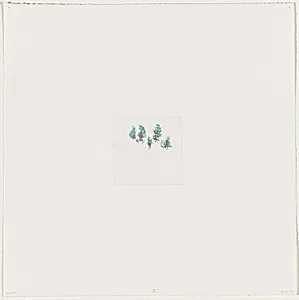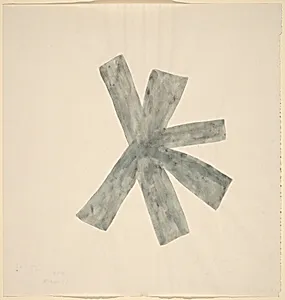
Richard Tuttle, born on July 12, 1941, in Rahway, New Jersey, recognized his calling as an artist by kindergarten, inspired by his grandfather's drawings and early visits to the Metropolitan Museum of Art with his mother. He studied art, philosophy, and literature at Trinity College in Hartford, Connecticut, earning a BA in 1963, and spent a semester at Cooper Union. There, he met curator Sam Wagstaff, who became a pivotal mentor, introducing him to Renaissance scholarship through Richard Offner and contemporary happenings. After graduation, Tuttle assisted at Betty Parsons Gallery, securing his first solo exhibition there in 1965 with constructed relief paintings. He formed a close friendship and mentorship with Agnes Martin, purchasing one of her drawings in 1964, which influenced his intuitive approach to line and repetition.
Tuttle works in the postminimalist tradition, creating small, casual, subtle, and intimate pieces from humble materials like wire, cloth, string, paper, and plywood, blurring lines between drawing, painting, sculpture, and installation. His pioneering casualism emphasizes fragility, present-moment perception, and handmade imperfection, rejecting Minimalism's precision for poetic, ephemeral forms that invite viewer contemplation. Key series include the Paper Octagonals (1970), irregular canvases pinned vulnerably to the wall; Wire Pieces (1971–1972), his most distinctive contribution; Ten Kinds of Memory and Memory Itself (1973), string drawings mapping body movements; and Shirts (1978) and Pants (1979) from his Fabric Workshop residency.
Major exhibitions underscore his impact: a Whitney Museum survey in 1975 featuring string works; participations in Documenta (1972, 1977, 1982) and Venice Biennale (1976, 1997, 2001); and a traveling retrospective originating at San Francisco Museum of Modern Art in 2005. Later highlights include I Don't Know, Or The Weave of Textile Language (2014) for Tate Modern's Turbine Hall and The Critical Edge (2016) at the Metropolitan Museum. Married to poet Mei-mei Berssenbrugge, with whom he has collaborated, Tuttle divides time between New York, Abiquiú, New Mexico, and Mount Desert, Maine. His legacy lies in dematerializing art, prioritizing process and the ineffable, profoundly influencing artists like Sarah Sze and Jim Hodges through his advocacy for "total living art" as societal healing.

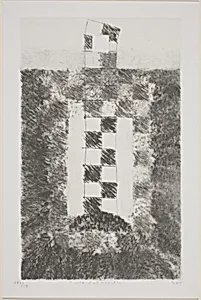
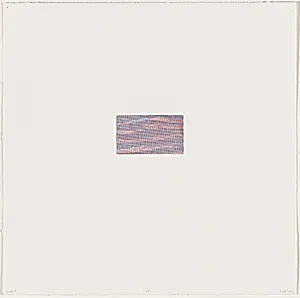
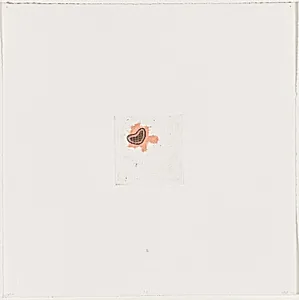
![Naked V [working proof 1]](https://images.artheonmuseum.org/nga/thumb/naked-v-working-proof-1-nga-230731.webp)