1900–1900
Robert Adams, born Robert Hickman Adams on May 8, 1937, in Orange, New Jersey, grew up amid frequent relocations that shaped his deep affinity for the American landscape—from New Jersey to Madison, Wisconsin, and finally to Wheat Ridge, Colorado, in 1952.) Contracting polio at age 12, he recovered but retained a sensitivity to the environment that fueled his later work. After earning a B.A. in English from the University of Redlands in 1959 and a Ph.D. in English literature from the University of Southern California in 1965, Adams taught at Colorado College. In 1963, he purchased his first 35mm camera and immersed himself in photography, studying historic journals like *Camera Work* and *Aperture* at the Colorado Springs Fine Arts Center while learning technique from professional photographer Myron Wood. He transitioned to full-time photography in 1970 after meeting Museum of Modern Art curator John Szarkowski.)
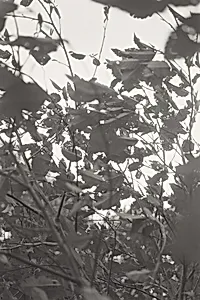
Adams's black-and-white photographs capture the American West's transformation—suburban sprawl, clear-cut forests, and industrial scars juxtaposed against enduring natural beauty—earning him a place in the New Topographics movement, which redefined landscape photography through its unflinching gaze at human alteration.) Pioneering this approach in the seminal 1975 exhibition *New Topographics*, alongside Lewis Baltz and others, his style emphasizes silence, light, and ecological fragility. Landmark series include *The New West: Landscapes Along the Colorado Front Range* (1974), documenting Colorado's suburban encroachment; *Summer Nights, Walking* (1982), intimate nocturnal views; *Our Lives and Our Children: Photographs Taken Near the Rocky Flats Nuclear Weapons Plant* (1984), confronting nuclear peril; and *Turning Back: A Photographic Journal of Re-exploration* (2005), revisiting Oregon's deforested coasts.)
Over five decades, Adams produced more than fifty books, including *From the Missouri West* (1980) and *The Place We Live* (2010 retrospective catalog), alongside major retrospectives at the Philadelphia Museum of Art (1989), Yale University Art Gallery, and the National Gallery of Art's *American Silence* (2022).) Honored with a MacArthur Fellowship (1994), Hasselblad Award (2009), and induction into the International Photography Hall of Fame (2020), his oeuvre—held in collections like the National Gallery of Art (359 works)—endures as a poignant call for environmental stewardship, blending despair with hope in the West's resilient vistas.)