
Ctrl K
**Robert Cribb (1755–1827)** was a British framemaker, carver, gilder, printseller, and publisher active in London. His career centered on the production and distribution of reproductive engravings after leading British artists of the period. Early biographical details remain sparse, with records primarily documenting his professional activities from the 1780s onward.
Cribb operated from addresses in Holborn, including 288 High Holborn, where he ran a business that combined framing, gilding, and print publishing. He specialized in issuing stipple and line engravings of portraits and historical subjects, often collaborating with skilled engravers such as William Nutter. His publications helped disseminate images of prominent figures to a wider audience through the expanding print market of Georgian and Regency Britain.
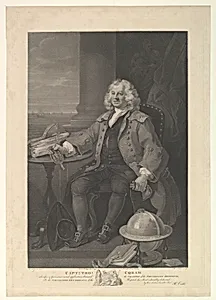
One of his notable publications is the 1796 engraving *Captain Thomas Coram* (c. 1668–1751), after the original portrait by William Hogarth. Engraved by William Nutter and published by Cribb, the print preserves Hogarth’s depiction of the philanthropist and founder of the Foundling Hospital. Cribb’s imprint appears on numerous other reproductive prints after artists including Joshua Reynolds, Thomas Lawrence, and Richard Westall, many of which survive in major collections such as the National Portrait Gallery, the Fitzwilliam Museum, and the Victoria and Albert Museum.
Although Cribb was not primarily a creator of original paintings, his role as a publisher and framemaker contributed significantly to the circulation and preservation of British portraiture. His output reflects the commercial vitality of London’s print trade at the turn of the nineteenth century and continues to be represented in public collections today.