Robert Mangold, born on October 12, 1937, in North Tonawanda, New York, grew up in a working-class family near Buffalo, where his father toiled in an organ factory and his mother worked as a department store buyer. From an early age, he showed artistic talent, borrowing art books from the library and pursuing illustration in high school. Mangold trained at the Cleveland Institute of Art from 1956 to 1959, initially in the illustration department before shifting to fine arts, then attended the Yale Summer School of Music and Art in Norfolk, Connecticut, on scholarship. He earned his BFA and MFA from Yale University in 1961 and 1963, respectively, experimenting with abstraction alongside classmates like Nancy Graves, Brice Marden, and Richard Serra.
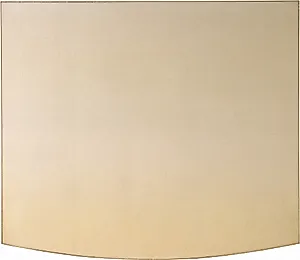
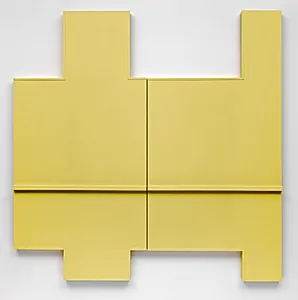
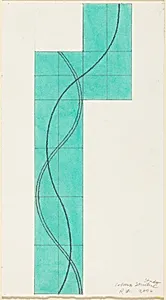
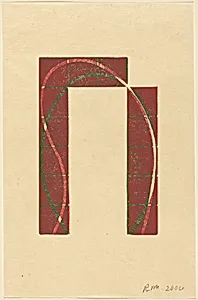
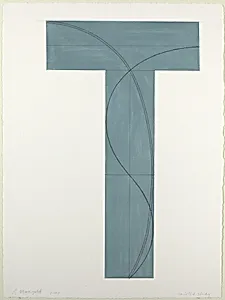
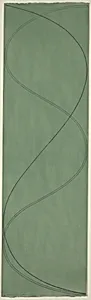
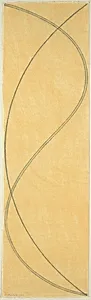
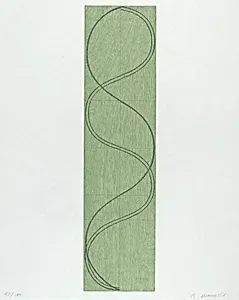
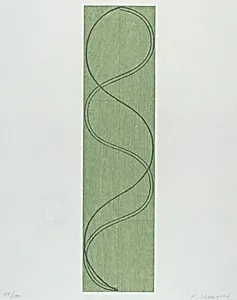
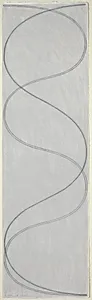
In 1962, Mangold moved to New York with his wife, fellow artist Sylvia Plimack Mangold—whom he married in 1961—and worked as a guard at the Museum of Modern Art, sharing ideas with Sol LeWitt, Robert Ryman, and Dan Flavin that shaped minimalist theory. Their sons include filmmaker James Mangold and musician Andrew Mangold. A cornerstone of Minimalism—though he preferred "geometric painter"—Mangold's work emphasizes line, shape, and subtle color on shaped canvases, blending painting and sculpture. Early pieces like *Grey Window Wall* (1964) used monochromatic Masonite constructions, evolving to acrylic on canvas with hand-drawn pencil lines creating tension between drawn, implied, and edged forms. His palette shifted from industrial grays to evocative hues like ochres and olives, exploring asymmetry and curvilinear edges in series that evoke architecture and classical motifs.
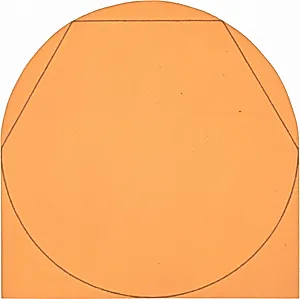
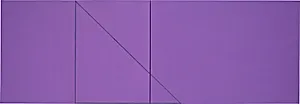
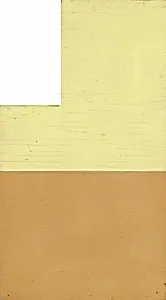
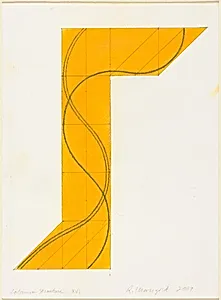
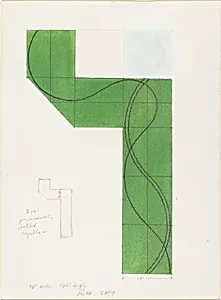
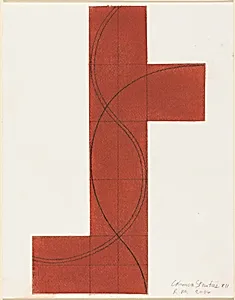
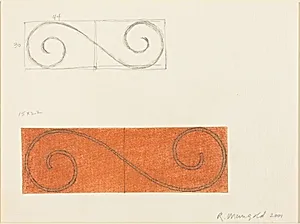
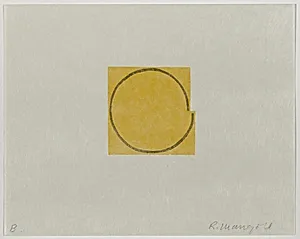
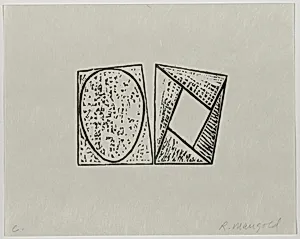
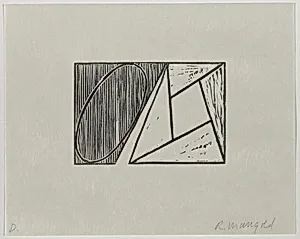
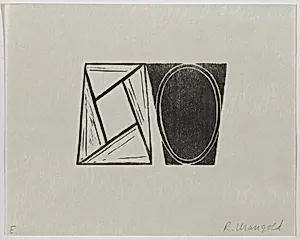
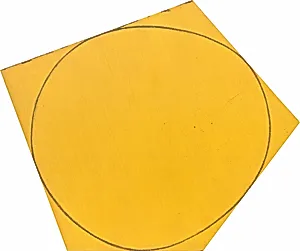
Mangold's oeuvre spans extensive series, including *Walls and Areas* (1964), *Pink Area* (1965), *Circle In and Out of a Polygon 2* (1973), *A Rectangle and a Circle within a Square* (1975), *Green / 2 Orange X Painting* (1983), *Attic Series XVII* (1991), *Column Structure* paintings (2006–2008), and *Curled Figure* works (2001–2002). Pioneering as a painter in a sculptural movement, he received a Guggenheim Fellowship in 1969 and taught at institutions like the School of Visual Arts and Hunter College. His legacy endures through major retrospectives at the Guggenheim (1971), Whitney Biennials (1979–2004), and Musée d’Orsay (2006), influencing artists like Peter Halley with self-reflexive geometry that rewards scrutiny, collapsing medium boundaries while affirming painting's poetic potential. Now based in Washingtonville, New York, Mangold continues producing nuanced abstractions.