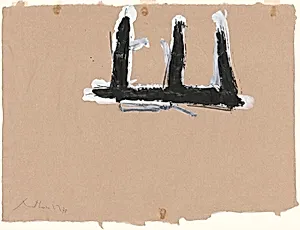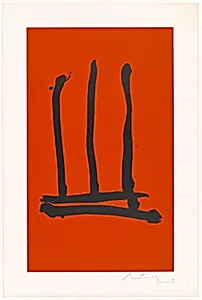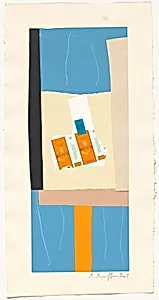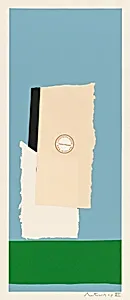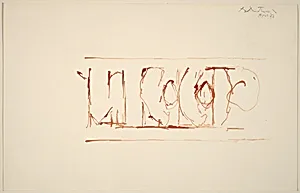
Robert Motherwell (1915–1991) was an American painter, printmaker, and writer who became one of the youngest members of the Abstract Expressionist movement and its most articulate intellectual spokesman. Born in Aberdeen, Washington, he studied philosophy at Stanford and Harvard, and art history at Columbia University under Meyer Schapiro, who encouraged him to pursue painting.
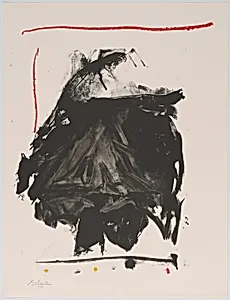
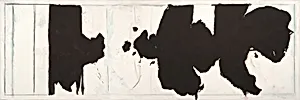
Motherwell's most celebrated body of work is the "Elegies to the Spanish Republic" series, which he began in 1948 and continued for over forty years. These monumental paintings — featuring stark black ovoid and rectangular forms against white grounds — constitute one of the great sustained meditations in modern art, addressing themes of death, loss, and the destruction of democratic Spain by fascism. The series comprises over 200 paintings and is considered one of the most important artistic achievements of the twentieth century.
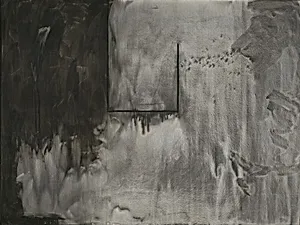
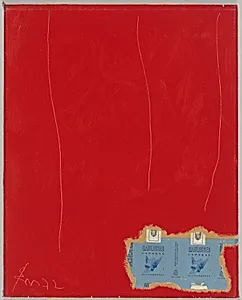
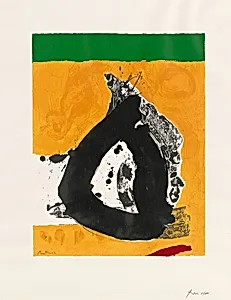
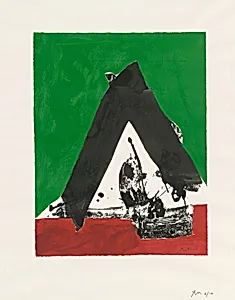
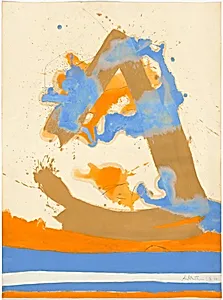
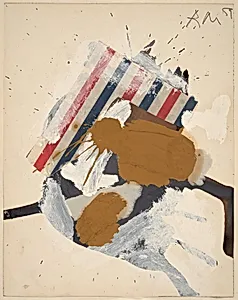
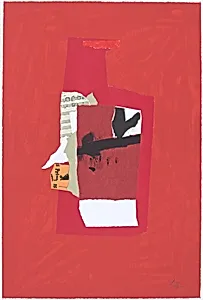
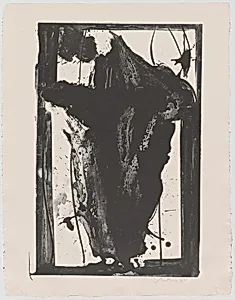
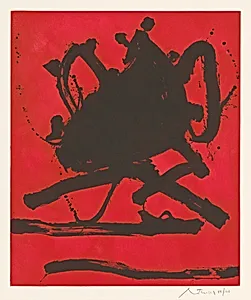
Beyond the Elegies, Motherwell produced a diverse body of work including lyrical paintings, collages incorporating found materials, and the "Open" series (begun 1967) — large canvases in which a charcoal-drawn rectangle suggests a window or architectural opening against fields of saturated color. He was also one of the finest printmakers among the Abstract Expressionists.
As an editor and writer, Motherwell published the influential "Documents of Modern Art" book series, bringing European avant-garde writings to American audiences, and co-edited the journal "Possibilities." He also co-founded the "Subjects of the Artist" school in New York. His work is held by the Museum of Modern Art, the National Gallery of Art, the Dedalus Foundation, and major museums worldwide.

![Mural Sketch [pen, ink, and wash]](https://images.artheonmuseum.org/nga/thumb/mural-sketch-pen-ink-and-wash-nga-75403.webp)