
Ctrl K
1835–1857
**Robert Muir (c. 1835–1857)** was a Scottish-born weaver who settled in Wayne County, Indiana, and specialized in the production of intricate double-cloth coverlets during the mid-nineteenth century.
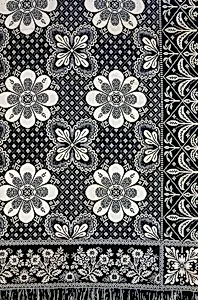
Little is recorded about his early life or formal training. Like many immigrant artisans of the period, Muir likely learned the weaving trade through family or local apprenticeship before emigrating to the United States. He worked in the established tradition of American coverlet weaving, employing a Jacquard attachment on a hand loom to create complex, repeating patterns in cotton and wool. This technology allowed for the precise geometric and floral motifs popular in Indiana households of the 1840s.
The sole documented work by Muir is a large coverlet dated 1845, now in the collection of the Art Institute of Chicago. Woven in two loom widths and joined, the piece measures approximately 93 by 72 inches and features a fringed border. Its double-cloth structure produces reversible designs typical of the era’s finest domestic textiles. The inscription “1845” confirms the date of production during his brief active period in Indiana.
Muir’s early death at around age twenty-two left only this single surviving example, underscoring how fragile the historical record can be for rural artisans of the antebellum period. Nevertheless, the coverlet stands as a tangible testament to the skill of Scottish weavers who helped shape American textile traditions in the Midwest. Today it offers viewers a rare glimpse into the technical sophistication and aesthetic preferences of mid-nineteenth-century domestic life.