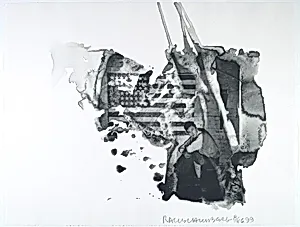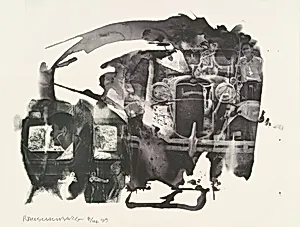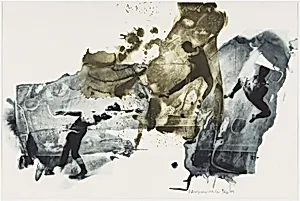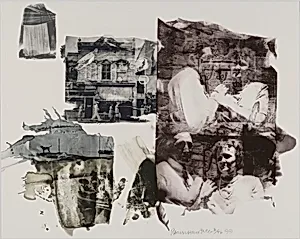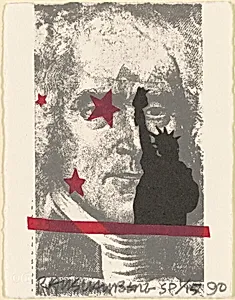
Robert Rauschenberg, born Milton Ernest Rauschenberg on October 22, 1925, in Port Arthur, Texas, to parents Ernest R. Rauschenberg and Dora Carolina (née Matson), grew up in a Fundamentalist Christian household. Initially enrolled in pharmacology at the University of Texas at Austin, he dropped out and pursued art studies at the Kansas City Art Institute and Paris's Académie Julian, where he met and married artist Susan Weil in 1950; their son, Christopher, was born the following year, though they divorced in 1953. In 1948, he attended Black Mountain College, studying under Josef Albers, the rigorous Bauhaus founder whom he later called his most important teacher despite their clashes, and finding vital encouragement from composer John Cage, with whom he forged a lifelong collaboration. From 1949 to 1952, he trained at New York's Art Students League under Vaclav Vytlacil and Morris Kantor.
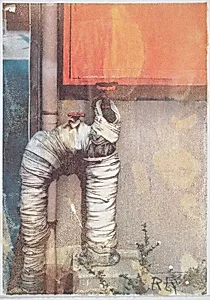
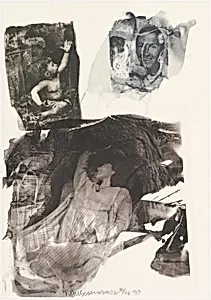
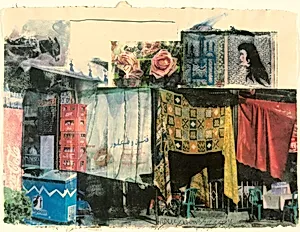
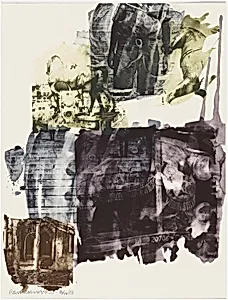
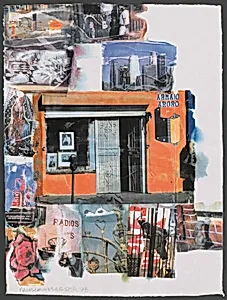
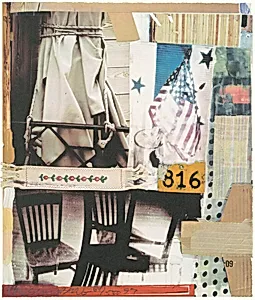
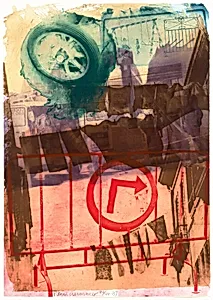
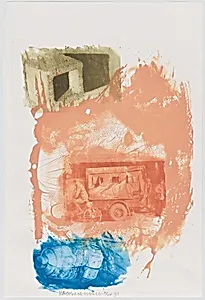
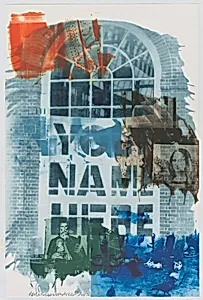
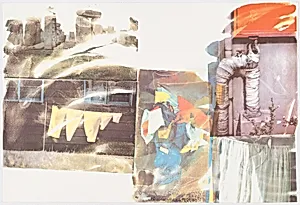
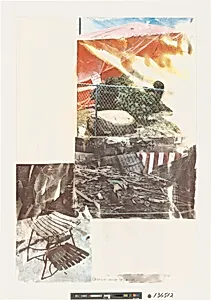
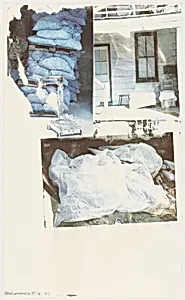
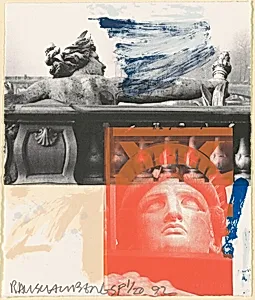
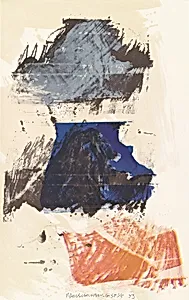
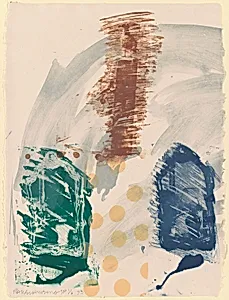
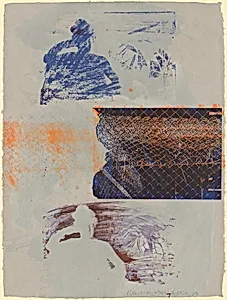
Rauschenberg worked in the Neo-Dada and Pop Art traditions, inventing the "Combine" (1954–1964)—hybrid works merging painting, sculpture, and everyday objects to erase boundaries between art and life, as in the New York School milieu. Iconic pieces include the White Paintings (1951), all-white canvases responding to ambient light; Bed (1955), a paint-smeared quilt and pillow recast as self-portrait; Monogram (1955–1959), featuring a stuffed Angora goat; Canyon (1959), with a mounted bald eagle; and Erased de Kooning Drawing (1953), a conceptual erasure of a Willem de Kooning work. Later series like Cardboards (1971–72), Jammers (1975–76), and Borealis (1988–92) expanded his multimedia experiments in printmaking, fabric, and metal.
A prolific collaborator, Rauschenberg designed sets and costumes for Merce Cunningham, Paul Taylor, and Judson Dance Theater, while partnering with Cy Twombly, Jasper Johns, and engineer Billy Klüver on tech-infused performances like 9 Evenings (1966). His legacy endures through the Rauschenberg Overseas Culture Interchange (ROCI, 1984), which promoted global exchange; the Robert Rauschenberg Foundation; and accolades like the 1964 Venice Biennale Grand Prize and 1998 Praemium Imperiale. Major retrospectives at the Guggenheim (1997), Met (2005), and MoMA/Tate (2017) affirm his transformative influence. Rauschenberg died on Captiva Island, Florida, in 2008. The museum's collection proudly holds 213 of his groundbreaking works.