Ctrl K
1882–1971
Rockwell Kent (1882–1971) was an American painter, printmaker, illustrator, and writer who combined a vigorous, heroic style with an adventurous life spent in some of the most remote landscapes on earth. Born in Tarrytown Heights, New York, he studied architecture at Columbia University and painting under William Merritt Chase, Robert Henri, and Abbott Handerson Thayer.
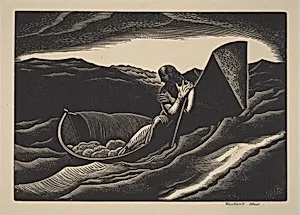
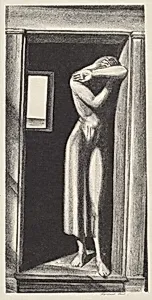
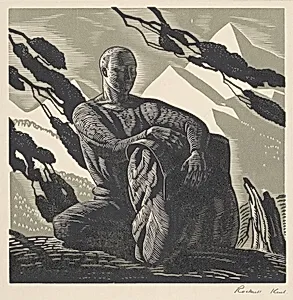
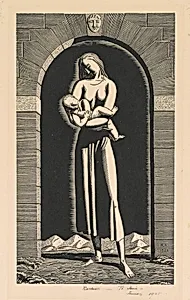
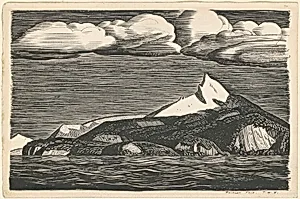
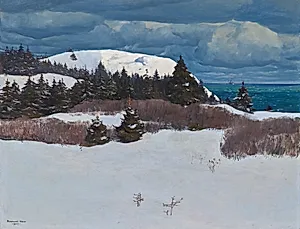
Kent's artistic vision was shaped by his passion for wild, dramatic landscapes. He lived and worked in Monhegan Island, Maine; Newfoundland; Alaska; Tierra del Fuego; and Greenland, producing paintings, drawings, and wood engravings of stark beauty that celebrated the power and majesty of untamed nature. His compositions feature bold contrasts of light and shadow, simplified monumental forms, and a sense of human solitude against vast natural forces.
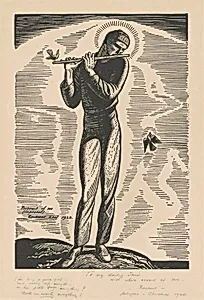
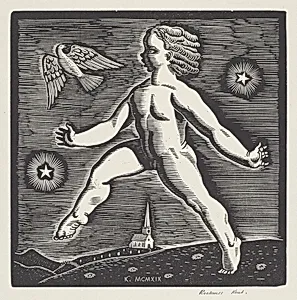
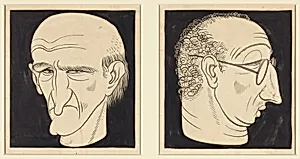
As an illustrator, Kent achieved perhaps his widest fame through his wood engravings for a 1930 edition of Moby-Dick, widely considered one of the finest illustrated books of the twentieth century. He also illustrated editions of Beowulf, Candide, Shakespeare, and Chaucer, bringing a dramatic, modernist sensibility to book illustration. His graphic work — clean, powerful, and decorative — influenced commercial illustration and graphic design well into the mid-century.
Kent was also a prolific writer, producing several memoirs of his travels including "Wilderness" (on Alaska) and "N by E" (on Greenland). His outspoken left-wing politics led to controversy during the McCarthy era. His paintings and prints are held by the Plattsburgh State Art Museum (which houses the largest Kent collection), the Metropolitan Museum of Art, the Smithsonian American Art Museum, and the Hermitage Museum in Saint Petersburg.