
Ctrl K
1819–1819
Roger Fenton (1819–1869), born into a prosperous Lancashire merchant family as the son of banker and MP John Fenton, initially pursued a scholarly path, earning a first-class BA from the University of London in 1840 before studying law at University College London. He abandoned these pursuits for art, training as a painter under the history painter Charles Lucy in London by 1847—the two became close collaborators on the board of the North London School of Drawing and Modelling—and briefly under Michel Martin Drolling at the École des Beaux-Arts in Paris, where he registered as a Louvre copyist in 1844. Exhibiting at the Royal Academy from 1849 to 1851, Fenton channeled Romantic influences from Turner and Constable into his canvases, but the Great Exhibition of 1851 ignited his passion for photography.
Inspired by the medium's precision, Fenton traveled to Paris to master the waxed-paper calotype process under Gustave Le Gray, swiftly establishing himself in London by 1853 as a founder and first honorary secretary of the Photographic Society (later Royal). His early triumphs included architectural views of Russia (Kiev, Moscow, St. Petersburg, 1852–1853), royal portraits of Queen Victoria and her family (1854), and an unpaid commission for the British Museum (1853). Fame arrived with his Crimean War commission in 1855, where, despite cholera and cumbersome wet-collodion gear hauled in a horse-drawn van, he produced over 350 negatives—landscapes like *The Valley of the Shadow of Death* (April 1855), portraits of officers, and harbor scenes at Balaklava—avoiding gore to emphasize war's monumentality and heroism.
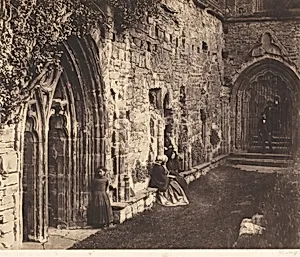
Fenton's oeuvre expanded to Gothic cathedrals (1855–1857), Westminster Palace (1857), Orientalist studio tableaux like *Seated Odalisque* (1858), and still lifes (1860), blending Romantic sensibility with photographic exactitude in compositions attuned to light, atmosphere, and scale. Working in the pioneering tradition of the Photographic Society, he elevated the medium from craft to fine art. Retiring abruptly in 1862 amid disputes over photography's commercialization—selling his equipment and resuming law—Fenton died young at 50, his legacy as the first major war photographer and a versatile master of landscape, portraiture, and genre secured by later revivals, including Tate Britain's 2005 exhibition of his 90 images.
No artworks found for this artist