1650–1736
Occupations
Domenico Rossetti (c.1650-1736) was a Venetian painter, engraver, and architect whose multi-faceted career spanned religious art, printmaking, and medallion design across Italy and Germany. Born in Venice around 1650, Rossetti initially worked for years as Maestro della Stampe (Master of Prints) at Venice's Zecca (mint) before his talents attracted the patronage of Bishop Giovanni Francesco Barbarigo, who brought him to Verona. This relocation proved pivotal, establishing Rossetti in a new artistic center where he produced altarpieces, frescoes, and architectural decorations. His career subsequently took him to Munich and Düsseldorf, where he worked for over a decade as an engraver for German courts. Rossetti's printmaking encompassed both original compositions and reproductions of Old Masters, including an important series after Tintoretto's works. He also created religious decorations commemorating saints, including work in the room at Verona's bishopric where Saint Charles Borromeo had stayed. Rossetti died in Verona on April 13, 1736, having successfully navigated multiple artistic disciplines and geographic locations.
Domenico Rossetti was born around 1650 in Venice, the Republic of Venice's magnificent capital and one of Europe's most important artistic centers. His early training remains undocumented, but he clearly acquired skills across multiple media—painting, engraving, and architectural design—suggesting comprehensive artistic education.
Rossetti spent years working as Maestro della Stampe at Venice's Zecca, the republic's mint. This position involved creating designs for coins, medals, and official imagery, requiring both artistic skill and technical precision in engraving. The work provided stable employment while developing his abilities in small-scale, detailed work and medallic composition.
Rossetti's career trajectory changed when he attracted the attention of Bishop Giovanni Francesco Barbarigo, an influential churchman and patron of the arts. Barbarigo brought Rossetti to Verona, establishing him in that city as his protégé. This patronage relationship provided opportunities for religious commissions and elevated Rossetti's status from mint employee to independent artist.
In Verona, Rossetti worked across multiple artistic domains. He created decorations for a room in the bishopric where Saint Charles Borromeo (1538-1584) had stayed, commemorating the Counter-Reformation saint's connection to the building. He also designed an altar for the Oratorio della Concezione, located next to the church of Santa Maria di Chiavica, demonstrating his architectural and decorative capabilities.
Rossetti's painting activity in Verona included altarpieces and frescoes executed throughout northern Italy, establishing his reputation as a religious artist capable of handling large-scale commissions. According to period sources, he was also described as an architect and architecture painter, suggesting involvement in architectural design or creation of architectural vedute (views).
From Verona, Rossetti traveled to Bavaria and the Rhineland, working in Munich and Düsseldorf for over a decade as an engraver. This extended German residence demonstrates the international mobility characteristic of successful eighteenth-century artists and the demand for Italian artistic expertise north of the Alps.
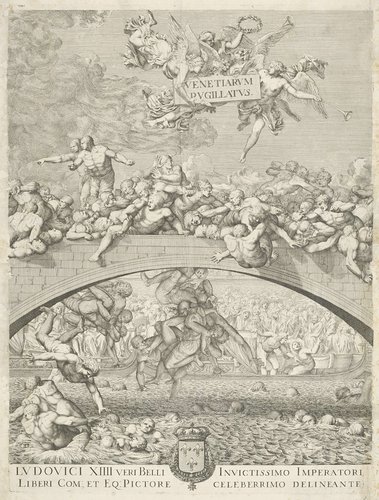
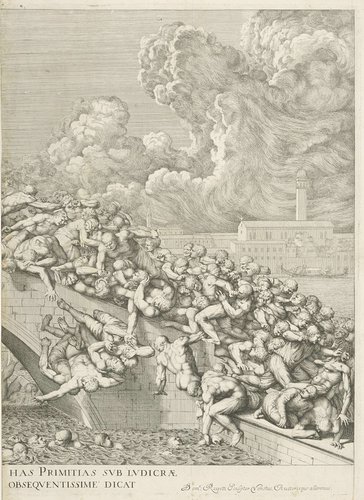
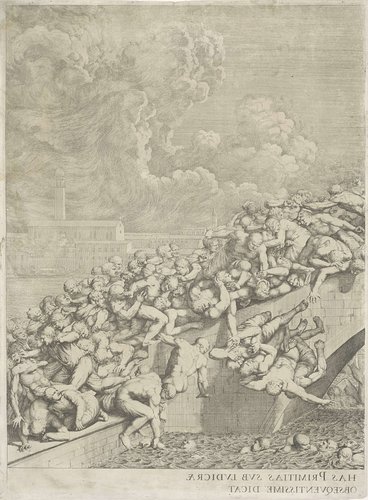
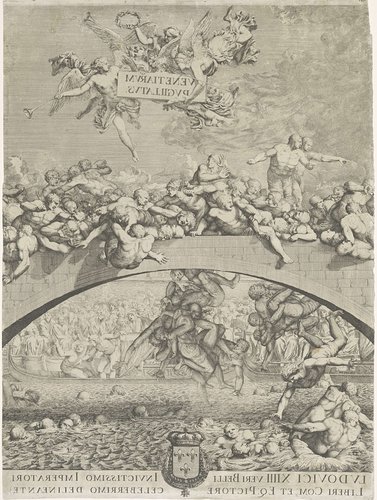
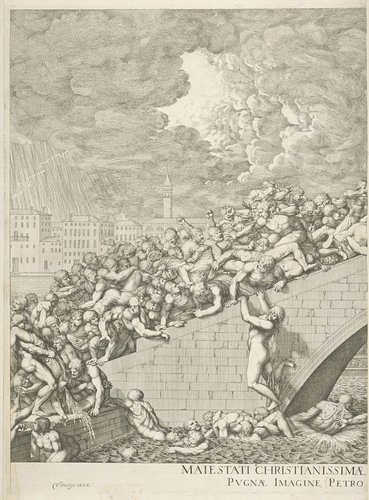
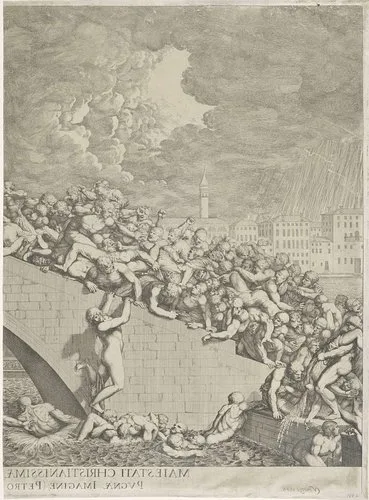
During this period, Rossetti concentrated on printmaking, creating both original compositions and reproductive engravings after other artists' works. His subjects included "Il Pugilato" (The Boxing Match), based on a painting by Pietro Liberi, and an important series of engravings reproducing works by the great Venetian master Tintoretto. These reproductive prints served the growing market for affordable images of famous paintings, making Old Master compositions accessible to collectors who could not afford originals.
Rossetti eventually returned to Verona, where he died on April 13, 1736, at approximately eighty-six years of age. His career exemplified the versatility expected of eighteenth-century artists, successfully working across painting, engraving, architecture, and decorative arts in both Italian and German contexts.
Artheon Research Team
Last updated: 2025-11-09
Biography length: ~486 words
Wikidata (CC0); Getty ULAN (ODC-By)
All 6 artworks loaded