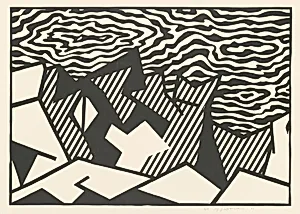
Roy Lichtenstein was born on October 27, 1923, in New York City to Milton Lichtenstein, a real estate broker, and Beatrice Werner Lichtenstein, a homemaker with musical training, in an upper-middle-class German-Jewish family. Growing up on the Upper West Side, he displayed early artistic talent, sketching jazz musicians and visiting museums like the Museum of Modern Art. In 1939, he studied painting and drawing at the Art Students League of New York under Reginald Marsh. He then attended Ohio State University starting in 1940, where his studies were interrupted by World War II service in the infantry across Europe from 1943 to 1946. Returning under the G.I. Bill, he earned a BFA in 1946 and MFA in 1949, profoundly influenced by mentor Hoyt L. Sherman, whose perception-based methods shaped his compositional approach; Lichtenstein later named his first son David Hoyt after him and endowed the Hoyt L. Sherman Studio Art Center at the university. He taught art intermittently at Ohio State, SUNY Oswego (1957–1960), and Rutgers University (1960–1963), encountering innovators like Allan Kaprow.
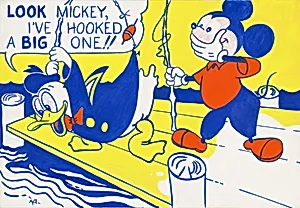
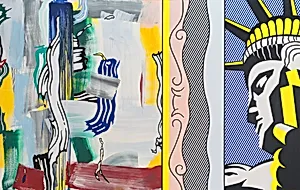
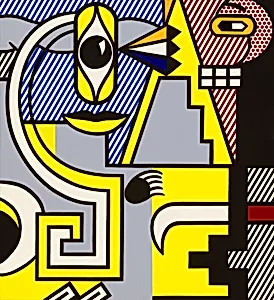
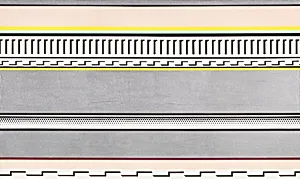
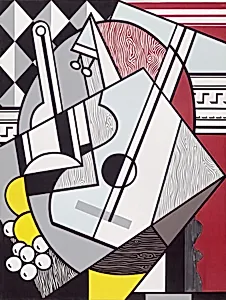
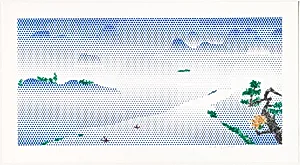
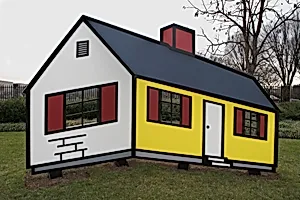
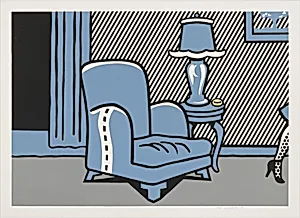
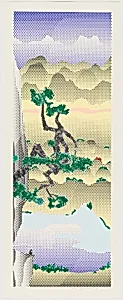
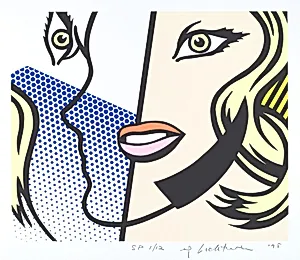
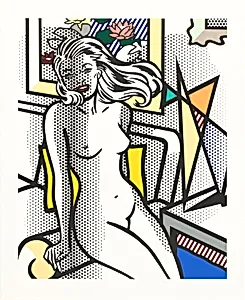
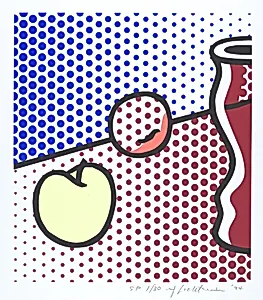
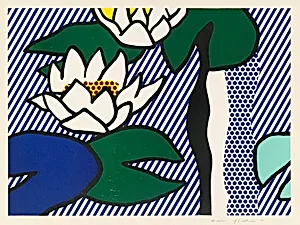
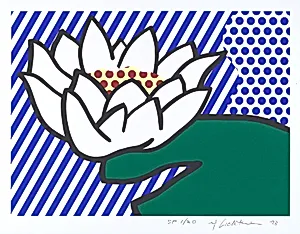
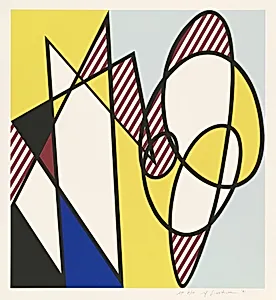
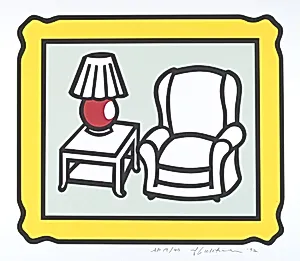
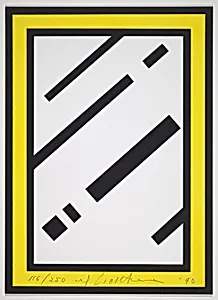
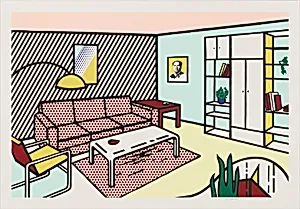
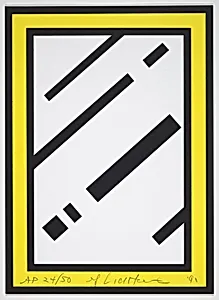
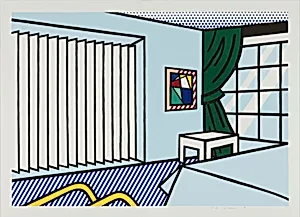
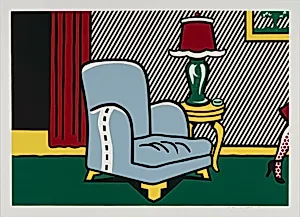
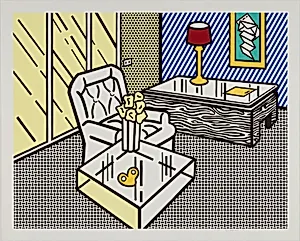
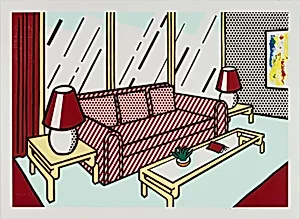
Lichtenstein's early work explored Cubism, Expressionism, and Abstract Expressionism, incorporating whimsical medieval motifs, mechanical elements, and proto-Pop cartoons like Mickey Mouse amid abstract grounds. His breakthrough came in 1961 with the Pop Art movement he helped pioneer, appropriating comic strips, advertisements, and commercial printing techniques—bold black outlines, flat primary colors, and signature Ben-Day dots—to elevate mass-produced imagery into monumental art, blurring high and low culture. Represented by Leo Castelli Gallery from 1961, he resigned teaching in 1964 to paint full-time, expanding into sculpture, prints, and series parodying art history, such as Brushstrokes (1965–1966) mocking Abstract Expressionism and later Mirrors (1969) and Entablatures (1971–1976).
Among his iconic works are *Look Mickey* (1961, National Gallery of Art), a self-deprecating cartoon blow-up sparked by his son's taunt; *Masterpiece* (1962); the romance drama *Drowning Girl* (1963, MoMA); the explosive war diptych *Whaam!* (1963, Tate Modern); and *In the Car* (1963). These canvases transformed banal panels into profound commentaries on perception and consumerism.
Lichtenstein's legacy endures as a Pop Art luminary, with retrospectives at the Guggenheim (1969, 1994) and Tate Modern (2012–2013), the National Medal of Arts (1995), and public commissions like the Times Square Mural (1994). Married first to Isabel Wilson (1949–1965), with sons David and Mitchell, then to Dorothy Herzka (1968–1997), he produced over 5,000 works before dying of pneumonia on September 29, 1997. The Roy Lichtenstein Foundation continues his authentication and archival efforts, cementing his challenge to artistic hierarchies.