Ctrl K
1806–1882
Rudolf Carl Friedrich Ernst von Normann (1806–1882), born in Stettin into the Pomeranian-Rügen noble family Normann, was the son of Prussian lieutenant Carl Wilhelm von Normann and Friedericke Luise von Owstin, who later remarried officer Felix von Borcke, making Prussian lieutenant general Ferdinand von Borcke his half-brother. A family garrison transfer brought the young Rudolf to Düsseldorf in 1817, where he attended the Lyzeum before briefly studying at the Royal Gymnasium in Koblenz. Military service defined his early adulthood: he joined the Kaiser Franz Garde-Grenadier-Regiment Nr. 2 in Berlin in 1827, rising to second lieutenant in 1832 and first lieutenant by 1845 in Düsseldorf's 4th Garde-Landwehr-Infanterie-Regiment, before resigning in 1847 to pursue art full-time.
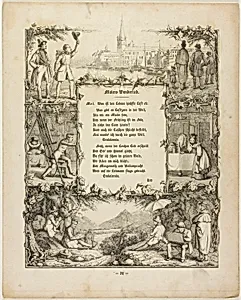
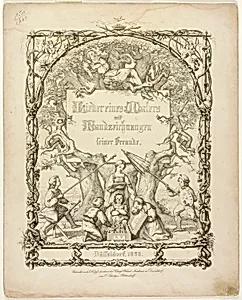
Normann's artistic training began informally at Düsseldorf's Sunday drawing school under Karl Friedrich Schäffer, Ernst Carl Thelott, and Lambert Cornelius. From 1834 to 1843, he formally studied at the Kunstakademie Düsseldorf, specializing in landscape painting with Johann Wilhelm Schirmer and later joining Wilhelm Schadow's master class. A 1835 study trip to Switzerland inspired works like *Swiss Landscape with a Mountain Lake* (1840) and *Cottages in a Mountainous Lakeland Scene* (1838). In 1844, he co-founded the progressive artist group Crignic with peers including Wilhelm Camphausen and Hans Fredrik Gude, and became a member of the Künstlerverein Malkasten, embodying the academy-critical spirit of the Düsseldorf School. His romantic landscapes, such as *Trarbach* (1832 and 1834 versions), captured the sublime beauty of the Moselle and Alps, while etchings like *The Painter's Wandering Song* (1837) appeared in Robert Reinick's *Songs of a Painter*.
Later, recommended by Prince Karl Anton von Hohenzollern, Normann moved to Dessau in 1866 as court theater director and chamberlain, designing sets and contributing architecturally to the Residenzschloss in 1874. His multifaceted career bridged painting, printmaking, scenography, and theater, reflecting the versatile Romantic ethos of the Düsseldorf School. Today, his works grace collections like the Art Institute of Chicago, and he is chronicled in key lexicons of 19th-century German art, affirming his place among the school's landscape masters.
All 2 artworks loaded