
Ctrl K
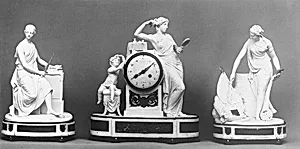
**Rue de Bondy** was a prominent porcelain manufactory located on the Rue de Bondy in Paris, active during the 18th century and specializing in high-quality hard-paste porcelain. Operating under royal and aristocratic patronage, the workshop produced decorative objects that combined delicate biscuit porcelain with ornate gilt-bronze mounts, reflecting the refined tastes of the French court and elite collectors. The factory is particularly noted for its association with the Dihl and Guérhard partnership, which benefited from the protection of the Duc d’Angoulême and contributed to the flourishing of Parisian porcelain production in the decades before and during the Revolution.
The manufactory worked firmly within the French porcelain tradition, emphasizing technical precision in hard-paste bodies and elegant, often neoclassical forms suited to clocks, ewers, basins, and ornamental figures. Its pieces frequently featured smooth, matte biscuit surfaces contrasted with gilded metalwork, creating luxurious yet restrained objects that appealed to Enlightenment-era sensibilities. While individual modelers or painters are rarely named in surviving records, the workshop’s output demonstrates the collaborative nature of porcelain production, where skilled artisans translated designs into durable, finely finished works.
One of the best-documented surviving examples is a mantel clock now in the Metropolitan Museum of Art, dated to the 18th century and made of hard-paste biscuit porcelain with gilt-bronze mounts. Standing approximately 14⅜ inches high, the clock exemplifies the factory’s ability to integrate timepieces with sculptural porcelain elements. Similar objects, including cups, ewers, and basins, are held in collections such as the Victoria and Albert Museum, confirming the manufactory’s reach across European decorative arts.
Rue de Bondy’s legacy endures through these museum holdings, which illustrate the sophisticated porcelain industry of pre-Revolutionary Paris. The factory’s products helped establish Paris as a center for luxury ceramics alongside Sèvres, influencing later 19th-century makers and preserving a tangible record of French decorative innovation. Though the precise dates of its founding and closure remain tied to broader histories of Parisian workshops, its distinctive mark continues to identify fine examples of 18th-century French porcelain.