Ctrl K
1897–1994
Sadie Berman (1897–1994) was an American artist best known for her meticulous contributions to the Index of American Design, a Federal Art Project initiative under the Works Progress Administration during the late 1930s and early 1940s. This ambitious endeavor commissioned artists across the United States to create precise watercolor renderings of everyday folk art objects, preserving the nation's decorative heritage amid the Great Depression. Berman's works, held in the National Gallery of Art's collection, exemplify this mission through their technical accuracy and artistic sensitivity, capturing the textures, colors, and craftsmanship of vernacular sculptures and artifacts.
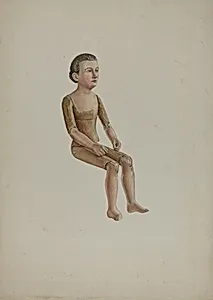
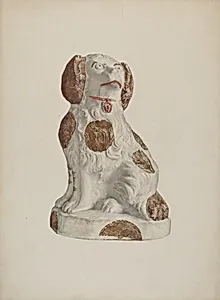
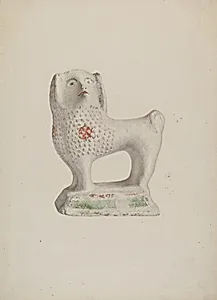
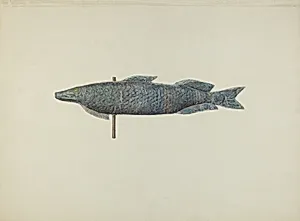
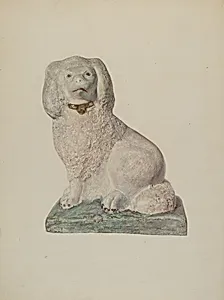
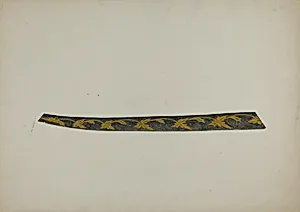
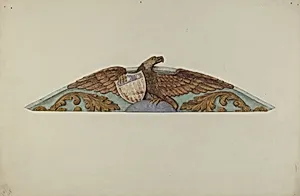
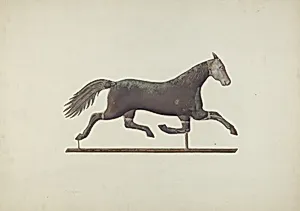
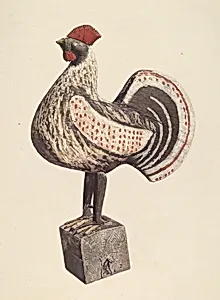
Little is documented about Berman's early life or formal training, reflecting the modest profiles of many Index artists who were often regional talents rather than established figures. Her style aligned with the project's emphasis on realism and documentation, employing watercolor, graphite, and colored pencil on paperboard to render three-dimensional folk objects with photographic fidelity. Among her nine known works in major collections, standout pieces include *Wooden Rooster* (c. 1938), a vividly painted carving; *Stern Piece* and *Ship's Trailboard* (both c. 1939), ornate nautical decorations; *Weather Vane - Horse* (c. 1939) and *Fish Weather Vane* (c. 1940–1941); multiple *Chalkware Dogs* (c. 1940–1941), whimsical molded figurines; and *Wooden Doll - "Sadie Berman"* (c. 1942), a poignant self-referential portrait of a handmade toy.
Berman's legacy endures through these renderings, which not only archived vanishing folk traditions—such as whittled roosters, chalkware animals, and ship carvings—but also elevated everyday American craftsmanship to fine art status. Housed in the National Gallery of Art and available in public domain via platforms like Artvee, her illustrations continue to educate on regional material culture, from New England weathervanes to Midwestern pottery. In an era of economic hardship, Berman's precise eye helped forge a visual record of cultural identity, reminding us how ordinary objects embody a nation's creative spirit.