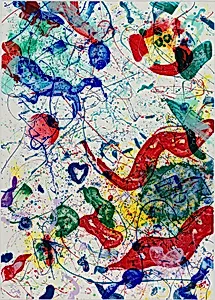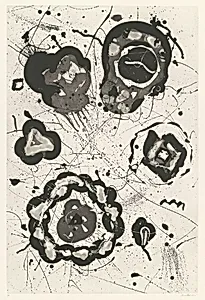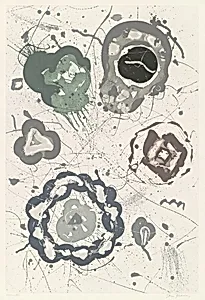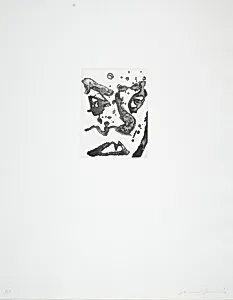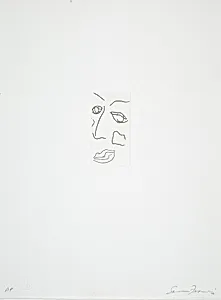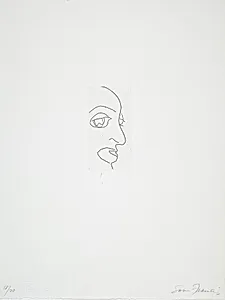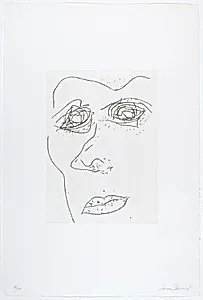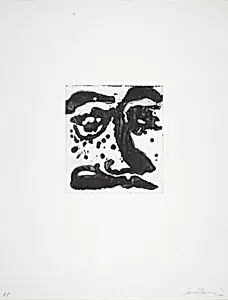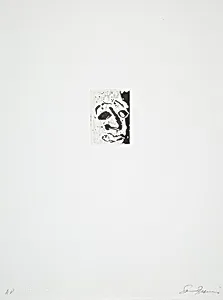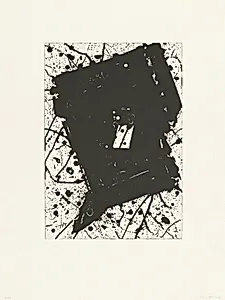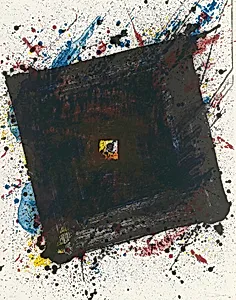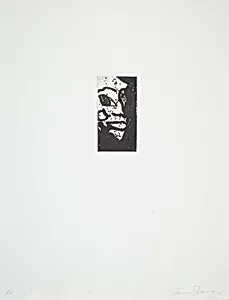
Samuel Lewis Francis (1923–1994), one of the most innovative Abstract Expressionists of the post-World War II era, was born in San Mateo, California, to Samuel Augustus Francis Sr. and Katherine Lewis Francis, who died when he was twelve; he formed a close bond with his stepmother, Virginia Peterson Francis. A promising student at San Mateo High School, Francis initially pursued botany, medicine, and psychology at the University of California, Berkeley. His path shifted dramatically during World War II service in the U.S. Air Force, where a 1944 spinal tuberculosis diagnosis from a test flight injury confined him to hospitals for years. There, a visit from artist David Park in 1945 sparked his passion for painting; he later studied under Park in 1947 and earned BA (1949) and MA (1950) degrees in art from Berkeley.
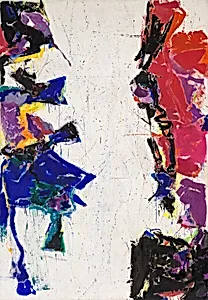
Francis's style evolved from the Bay Area Figurative tradition into a luminous Abstract Expressionism, influenced by Jackson Pollock's drips, Clyfford Still's fields, and Mark Rothko's veils, while embracing Tachisme during his 1950s Paris sojourn. Champion by critics like Michel Tapié, he pioneered "open" paintings with vast white expanses allowing color to breathe, drawing from Zen Buddhism, Asian art, and Monet's waterlilies. Landmark works include Big Red (1953), featured in MoMA's Twelve Artists show; Basel Murals (1956–1958) for Kunsthalle Basel; Middle Blue and Summer #1 (both 1957); Composition in Black and Blue (1955); and Symphony in Blue (1958). The 1960s Blue Balls series (1960–1963) evoked his renal pain with biomorphic blue forms, followed by Edge paintings confining color to margins.
In later decades, Francis traversed Tokyo, Mexico City, and New York, producing Fresh Air pictures (1970s) with roller-applied drips and monumental Matrix grids (1973–1974) up to twenty feet wide. Married five times—with artist wives Muriel Goodwin, Teruko Yokoi (mother of daughter Kayo), Mako Idemitsu (sons Osamu and Shingo), and Margaret Smith (son Augustus, also an artist)—he founded the Lapis Press in 1984. Despite prostate cancer and a paralyzing fall, he painted 150 left-handed works in his final year. Francis's legacy endures through thousands of canvases, prints, and monotypes in collections like MoMA, Tate Modern, and Centre Pompidou, cementing his role as a global pioneer of color and light; the Sam Francis Foundation ensures his catalogue raisonné and enduring influence.

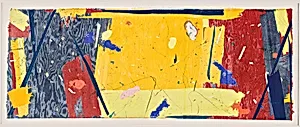
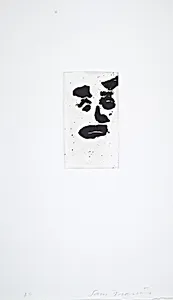
![King Corpse [special proof]](https://images.artheonmuseum.org/nga/thumb/king-corpse-special-proof-nga-71569.webp)