Ctrl K
1783–1852
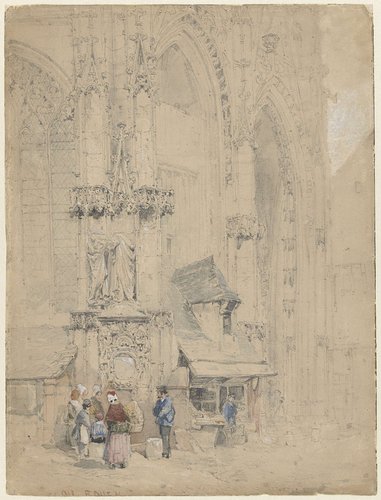
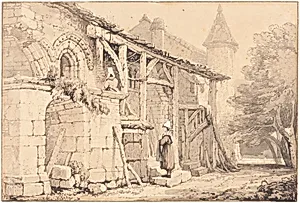
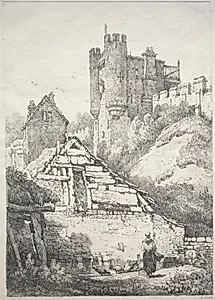
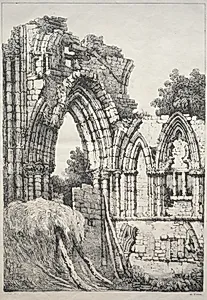
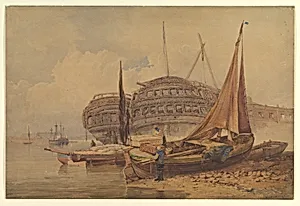
Samuel Prout was born in Plymouth in 1783, the son of a naval outfitter, and grew up in a port city whose seafront and trading life attuned him to architecture, boats, and the textures of a working world. He moved to London in 1803 and initially struggled to establish himself, producing marine subjects for print publishers and taking on pupils while refining the instructional drawing books for which he became an early reputation. It was not until around 1818 that Prout discovered the subject matter that would define his career: the crumbling Gothic architecture of northern France. A journey from Le Havre to Rouen produced sketches of Normandy's ancient buildings — carved stonework, jutting gables, shadowed archways — that he exhibited with immediate success at the Water Colour Society in 1819.
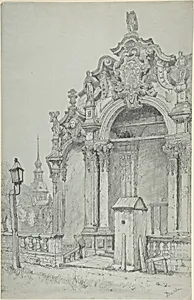
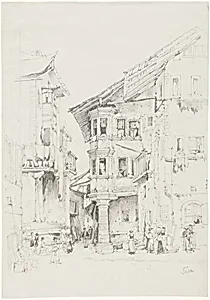
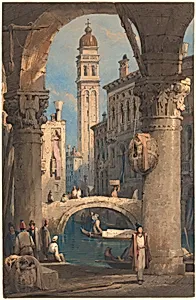
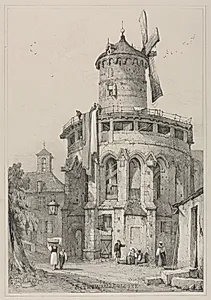
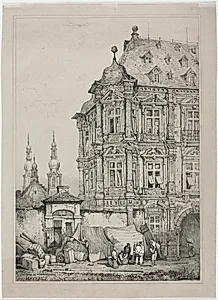
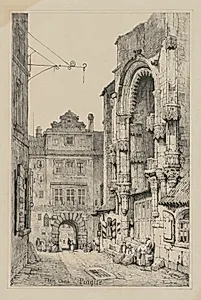
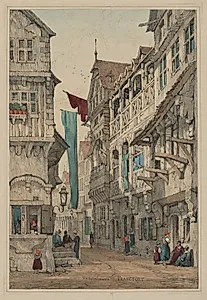
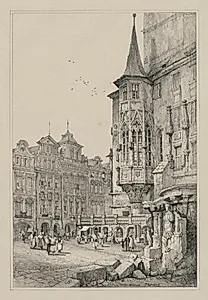
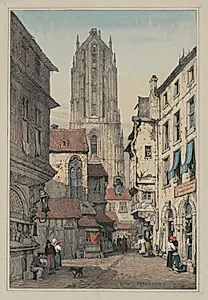
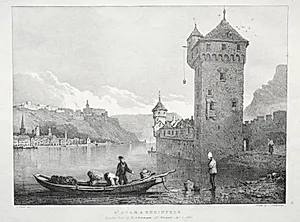
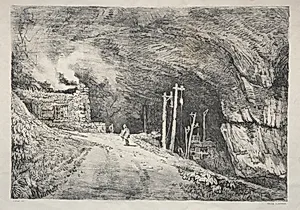
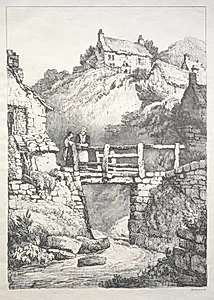
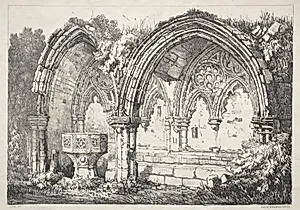
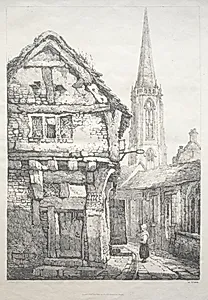
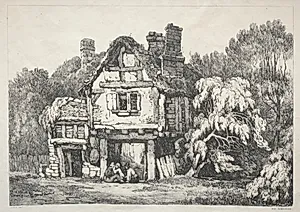
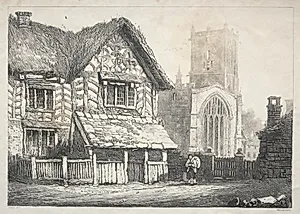
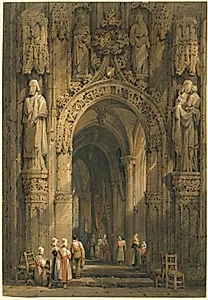
Prout's artistic method was inseparable from travel. Over the following decades he journeyed extensively through France, Belgium, Germany, Italy, and the Netherlands, filling sketchbooks with the architectural fabric of Europe's medieval and early modern cities. Venice occupied a particularly prominent place in his imagination. His watercolours conveyed a world of picturesque antiquity with a rough, spontaneous technique: crumbled surfaces, figures of merchants and peasants inhabiting shadowed doorways, the sense of a living street life animated by centuries of history. John Ruskin, who would become the century's most influential art critic, admired Prout's work deeply in his youth. Prout was also an early and significant practitioner of lithography, helping to popularise the medium as a means of disseminating architectural imagery.
Prout's public recognition was considerable. He was appointed Painter in Water-Colours in Ordinary to King George IV in 1829 and subsequently held the same position under Queen Victoria. His watercolours were among the most widely reproduced and collected of the early nineteenth century, introducing British audiences to the architectural splendours of a continent many could not visit in person. He died in 1852 at his home in Denmark Hill, London, and was buried at West Norwood Cemetery. His works remain important documents of European architecture as it existed before the modernisation of the nineteenth century swept many of its streets away.