Ctrl K
Occupations
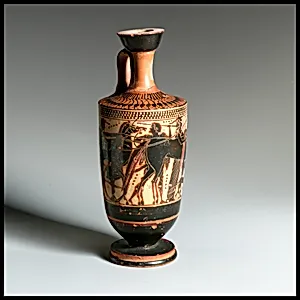
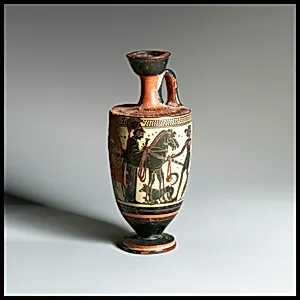
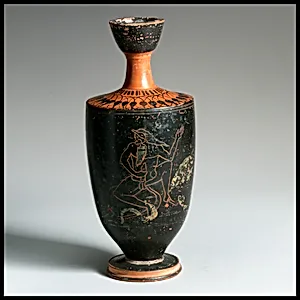
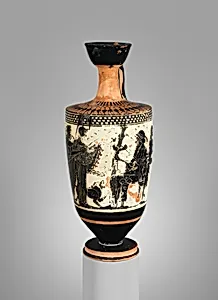
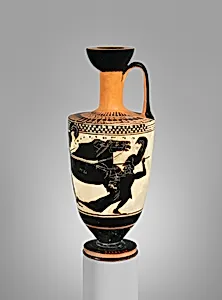
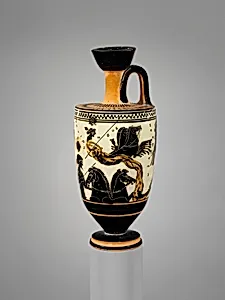
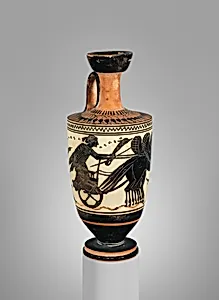
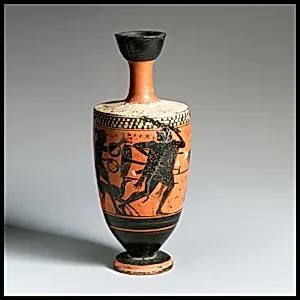
The Sappho Painter was an Attic black-figure vase painter active during the Late Archaic period, approximately 510-490 BCE. This anonymous artist's conventional name derives from their name vase, a kalpis (water jar) depicting the poet Sappho, currently held in the National Museum in Warsaw. Like most ancient Greek vase painters, this artist never signed their works, and their artistic personality has been identified through stylistic analysis by modern scholars, particularly in the tradition established by Sir John Beazley. The Sappho Painter's oeuvre is substantial, with scholars having identified the artist's hand on ninety-five vessels. Remarkably, seventy percent of these are lekythoi (oil flasks), suggesting specialization in this particular vessel type, which was commonly used for storing oil and often placed in tombs. The painter's work has also been identified on tomb wall slabs and epinetra (ceramic thigh guards used by women while carding wool). Technically, the Sappho Painter is notable for avoiding the red-figure technique that was becoming dominant during their active period, instead working primarily in black-figure and pioneering the use of white-ground technique. Nearly half of the painter's works employ white-ground, a method involving painting on a white slip background. The artist also sometimes used Six's technique, whereby figures are laid on a black surface in white or red with details incised so that the black shows through. The Sappho Painter was apparently influenced by and possibly trained under the Edinburgh Painter and shared a workshop with the Diosphos Painter.
The Sappho Painter was active during the Late Archaic period of Greek art, a time of transition between black-figure and red-figure vase painting techniques. While red-figure technique had been invented around 530 BCE and was gaining popularity, the Sappho Painter deliberately continued working in the older black-figure style while also pioneering white-ground technique. The painter worked in Athens, the center of Greek pottery production, creating primarily lekythoi (oil flasks) but also other vessel types. The painter appears to have been associated with the Edinburgh Painter, possibly as a student, and worked in the same workshop as the Diosphos Painter, suggesting participation in a collaborative artistic environment. The painter's choice to specialize in white-ground technique and Six's technique, while avoiding red-figure, represents a distinctive artistic path during a period of technical innovation in Athenian ceramics.
Artheon Research Team
Last updated: 2025-11-09
Biography length: ~484 words
Wikidata (CC0); Getty ULAN (ODC-By)