Ctrl K
1855
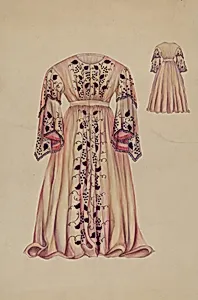
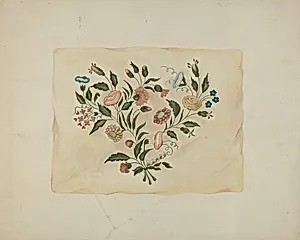
Sarah F. Williams was an American artist active during the late 1930s, renowned for her contributions to the Index of American Design (IAD), a Works Progress Administration (WPA) Federal Art Project launched in 1935. This initiative employed hundreds of artists across the United States to create watercolor renderings of historical American crafts, furniture, textiles, and folk objects, aiming to document and celebrate the nation's vernacular artistic heritage amid the Great Depression. Williams produced at least twelve such works, now housed in the National Gallery of Art, where they exemplify the project's mission to capture the intricate details of everyday artifacts before they faded from living memory.
Details of Williams's early life, formal training, or teachers are not well documented, leaving her personal background sparsely recorded in art historical sources. What survives of her oeuvre reveals a meticulous draftsman skilled in watercolor, graphite, and occasionally colored pencil on paper. Her style is characterized by hyper-realistic precision, rendering textures, forms, and subtle aging with scientific fidelity—hallmarks of the IAD's documentary approach. She focused on domestic and utilitarian objects reflective of colonial and early American craftsmanship, from finely embroidered textiles to sturdy wooden furnishings, evoking the intimate history of American homes.
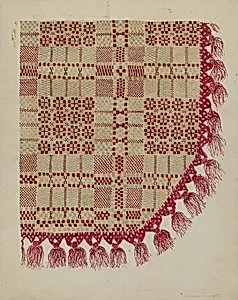
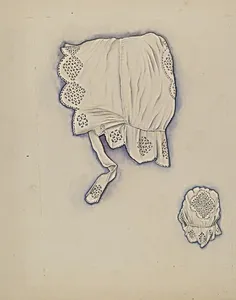
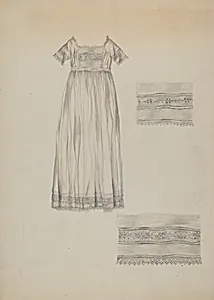
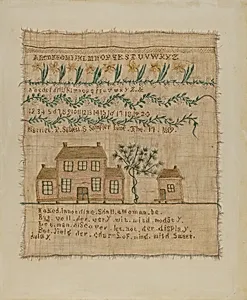
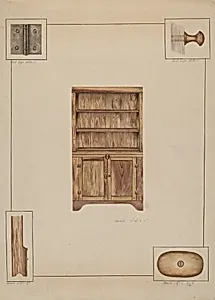
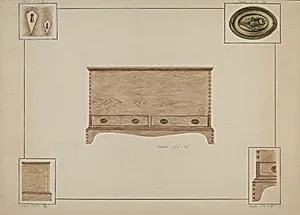
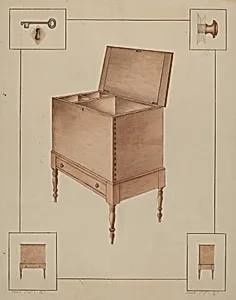
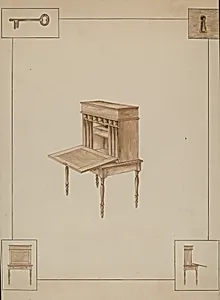
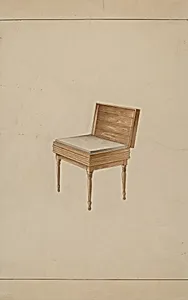
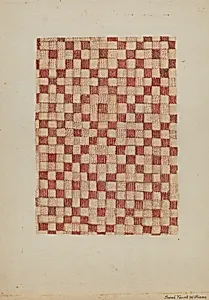
Among her standout pieces are the *Coverlet* (c. 1940), a luminous depiction of a woven bedcover with bold geometric patterns; the *Handkerchief Case* (c. 1938), showcasing delicate needlework storage; the *Lady's Night Cap* (c. 1938), highlighting lace-edged intimacy; the *School-master's Desk* (probably 1938), a functional writing table with hinged lid; the *Tewer or Cupboard* (c. 1938); and the *Sugar Chest* (c. 1938), a rare storage piece for safeguarding valuables. Other works include samplers, blanket chests, and a silk taffeta costume, each annotated with dimensions and materials of the original objects.
Williams's legacy lies in her role as a preserver of cultural ephemera, bridging art and anthropology. Her IAD renderings not only immortalized overlooked crafts but also underscored the aesthetic merit of "folk" traditions, influencing postwar appreciation for American decorative arts. Today, these pieces educate museum visitors on the artistry embedded in the mundane, reminding us of the hands that shaped ordinary lives.