
Ctrl K
1571–1730
Occupations
**B. Schaak (1571–1730)**
B. Schaak was a Dutch painter active from the late 16th to early 18th century, specializing in vanitas still lifes during a period when this genre gained prominence in the Netherlands. Born in 1571, Schaak worked amid the transition from Renaissance to Baroque art, contributing to the symbolic still-life tradition that peaked in the Dutch Golden Age. Vanitas paintings, as defined in art historical sources, drew from Ecclesiastes' theme of vanity, featuring objects like skulls, hourglasses, and extinguished candles to meditate on mortality, pleasure's futility, and earthly transience. Schaak's oeuvre aligns with this allegorical style, which began in the 16th century with innovators like Jacques de Gheyn II and evolved through the 17th century.
Early life and training for B. Schaak are not well documented, with no records of specific teachers, mentors, art schools, or family relationships in art history sources such as Wikipedia or museum databases. He operated independently of major documented movements or academies, though his subjects place him within the broader Dutch still-life tradition flourishing around 1585–1730. Without evidence of formal study under notable figures, Schaak's development remains obscure, reflecting the era's many specialized, lesser-known practitioners who catered to a prosperous collector class.
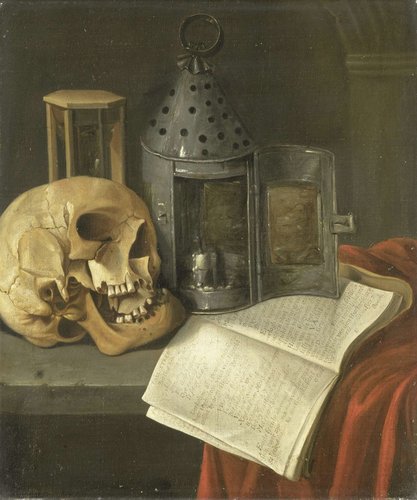
Schaak's known major work, *Vanitas Still Life*, depicts quintessential memento mori elements—a skull, lantern with candle, hourglass, and open book—arranged on a wooden table, as preserved in the Rijksmuseum collection. This piece embodies the genre's intimate realism and layered symbolism, where everyday objects warn against worldly attachments. With only one confirmed artwork in major collections, his output appears limited in surviving records.
Schaak's legacy endures as a modest yet poignant voice in vanitas art, reinforcing the moral introspection central to Dutch Baroque still lifes. Though overshadowed by masters like Pieter Claesz, his painting serves modern audiences as a vivid relic of 17th-century philosophy, accessible via institutions like the Rijksmuseum and echoed in explorations of the genre's cultural resonance.
(Word count: 348)
Wikidata (CC0); Getty ULAN (ODC-By)