Ctrl K
1606–1669
**The School of Rembrandt van Rijn**
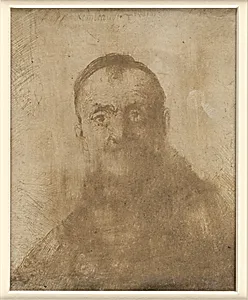
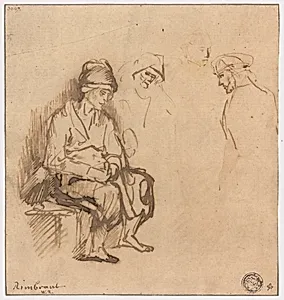
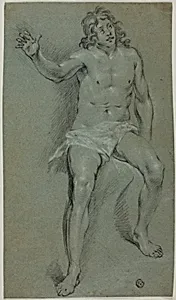
The School of Rembrandt van Rijn refers to the collective body of artists who trained and worked in the workshop of the master Dutch painter Rembrandt Harmenszoon van Rijn (1606–1669) during his active career in Leiden and Amsterdam. Rembrandt operated a large and prolific studio, where pupils paid 100 guilders annually for instruction, allowing him to earn substantial income from their tuition alone—reportedly 2,500 guilders per year. Training emphasized hands-on practice: students copied Rembrandt's compositions, assisted in executing large commissions, and sometimes retouched or completed paintings sold under his name or as authorized replicas. This collaborative model blurred lines between master and pupil works, fostering a distinctive style while complicating modern attributions.
Among the many documented pupils who studied under Rembrandt were Gerrit Dou, Ferdinand Bol, Govert Flinck, Carel Fabritius, Nicolaes Maes, Aert de Gelder, Samuel van Hoogstraten, Gerbrand van den Eeckhout, Willem Drost, and his own son Titus van Rijn. These artists worked in the Rembrandt school tradition of the Dutch Golden Age, absorbing his innovations in portraiture, biblical narratives, and genre scenes. Dou began in Leiden around 1628, while Bol and Flinck joined in Amsterdam by 1634; several, like Fabritius and Drost, produced works nearly indistinguishable from Rembrandt's in their early phases.
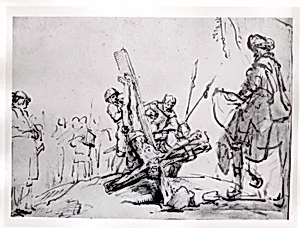
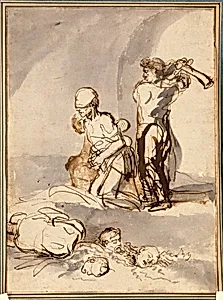
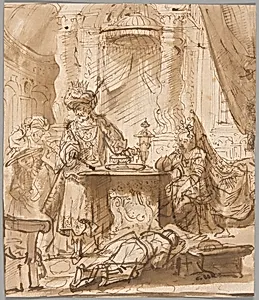
The school's output featured dramatic chiaroscuro lighting, emotional psychological depth, and rich impasto textures hallmarks of Rembrandt's mature style, applied to portraits, history paintings, and drawings. Notable examples include *The Martyrdom of Saint Peter* (late 1650s), a reed pen and ink drawing capturing intense biblical drama, and various works at institutions like the Art Institute of Chicago, such as *The Degradation of Haman before Ahasuerus and Esther* (1630s). The legacy of the School endures in the proliferation of Rembrandt-inspired art across Europe, with pupils like Bol and Maes achieving independent fame and sustaining the master's humanistic vision long after his death, cementing his influence on Baroque painting and beyond.