Ctrl K
1814–1874
Occupations
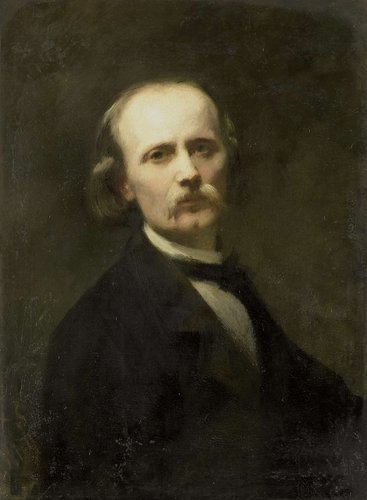
Johan Georg Schwartze (1814–1874) was a prominent Dutch portrait painter whose career bridged the Atlantic and exemplified the refined realism of the Düsseldorf school. Born in Amsterdam on October 20, 1814, to merchant Johann Engelbert Schwartze and Eleonora Schildbach, he emigrated with his family to Philadelphia at age three, where his father established a paint and varnish factory. There, young Schwartze received his initial artistic training under the history painter Emanuel Leutze. In 1838, he returned to Europe, enrolling at the Königlich Preußischen Kunstakademie in Düsseldorf from 1839 to 1841. As the academy's first "American" student, he studied under portraitist Karl Ferdinand Sohn while taking private lessons in landscape from Carl Friedrich Lessing, immersing himself in the Düsseldorf school's emphasis on meticulous detail, dramatic lighting, and psychological depth.
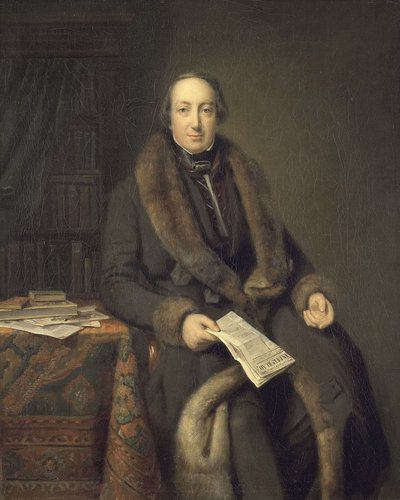
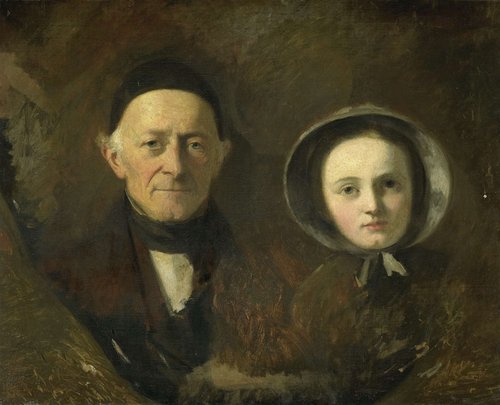
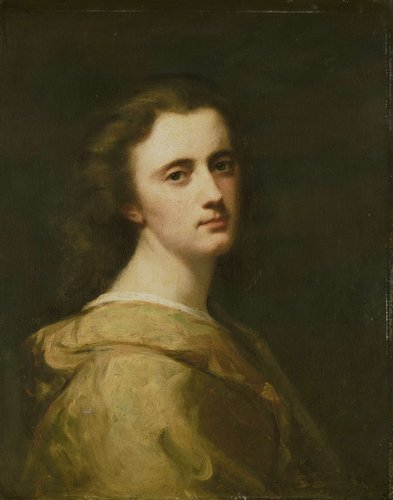
Settling permanently in Amsterdam after marrying Maria Elisabeth Therese Herrmann in Koblenz in 1846, Schwartze built a successful practice as a portraitist of family, notables, and historical subjects. His style drew on Düsseldorf precision with nods to Rembrandt's chiaroscuro, as seen in his 1869 *Self-Portrait* (Rijksmuseum), where shadowed features convey introspective intensity. Among his finest works are the tender *Portrait of Johann Joseph Hermann (1782–1857), his father-in-law, with Ida Schwartze, the artist's oldest daughter* (Rijksmuseum); *Portrait of Thérèse Schwartze (1851–1918), his daughter at age 16* (1868, Rijksmuseum); *Pieter Arnold Diederichs* (Rijksmuseum); *Abraham Willet* (1853, Amsterdam Museum); and *Arnoud David Willink* (1847, Museum Voorschoten). Elected to the Koninklijke Academie in 1845 and Arti et Amicitiae in 1847, he exhibited widely, blending European academicism with American vigor.
Schwartze's legacy endures through his artistic dynasty and mentorship. Father to painter Thérèse Schwartze, sculptor Georgine Schwartze, artist George Washington Schwartze, and others—including Clara Theresia, mother of Amsterdamse Joffers Lizzy Ansingh and Thérèse Ansingh (Sorella)—he nurtured a family of creators. He also taught painter Maria Vos, extending the Düsseldorf tradition into Dutch modernism. Dying in Amsterdam on August 28, 1874, Schwartze left a corpus of intimate, psychologically acute portraits that capture 19th-century bourgeois life with enduring empathy.
Wikidata (CC0); Getty ULAN (ODC-By)