Ctrl K
**Sebald Beham (1500–1550)**, a pivotal figure among the German "Little Masters," was born in Nuremberg alongside his younger brother Barthel Beham (1502–1540), with whom he shared a profound artistic bond. Little is documented about his early training, though he emerged as a journeyman painter (*Malergeselle*) by 1521 and established his own workshop as a master by 1525. In January 1525, Sebald, Barthel, and fellow artist Georg Pencz faced banishment from Nuremberg for heresy, blasphemy, and defiance of city authority—charges tied to their Lutheran sympathies amid the Peasants' War—though they returned months later after Nuremberg's shift to Lutheranism. Tensions persisted; in 1528, Sebald fled again after accusations of plagiarizing Albrecht Dürer's unpublished horse proportions treatise for his own illustrated manual.
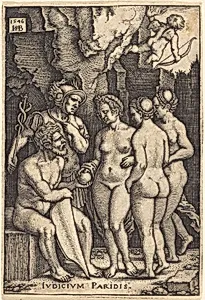
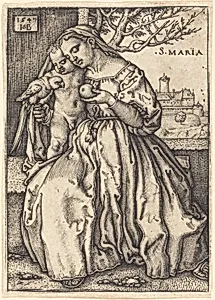
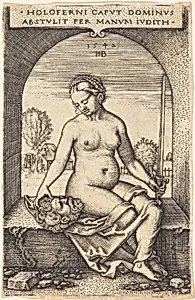
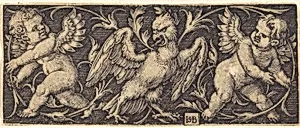
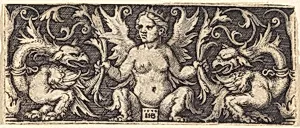
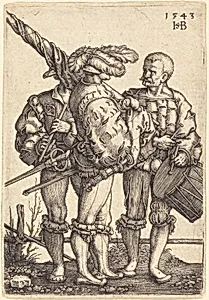
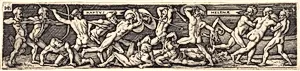
Sebald's career flourished through printmaking, painting, and stained-glass design, with over 250 engravings, 18 etchings, and 1,500 woodcuts to his name, often executed in postage-stamp sizes brimming with intricate detail. He worked in the Nuremberg tradition, inheriting Dürer's legacy while pioneering secular themes like peasant life, classical myths, and erotic motifs. After stints in Munich—producing a grand 1530 woodcut of Emperor Charles V's entry—he settled mostly in Frankfurt by 1532, gaining citizenship in 1540 and collaborating with printer Christian Egenolff. Notably, Sebald frequently engraved after Barthel's innovative designs, adapting his brother's Italianate figures and unconventional compositions, as Barthel shifted toward portraiture for Bavarian dukes and Emperor Charles V.
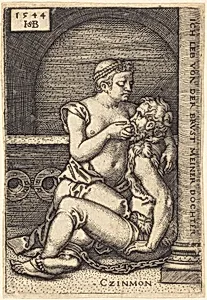
Among Sebald's masterpieces are *Adam and Eve* (1543), *Cimon and Pero* (1544), and *Three Women in a Bath House* (1548), all after Barthel; his reinterpretation of Dürer's *Melancholia* (1539); and *Joseph and Potiphar's Wife* (1544). He also painted a David tabletop (1534, Louvre) and illuminated prayer books for Cardinal Albrecht of Brandenburg. Sebald's entrepreneurial spirit—publishing his own prints and manuals—cemented his legacy as a bridge between Dürer's monumental style and the intimate, market-savvy graphics of later generations, influencing bourgeois collectors across Europe.