Ctrl K
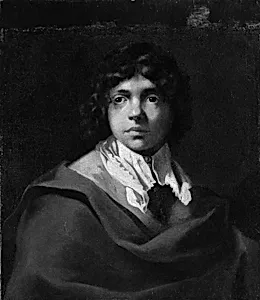
1616–1671
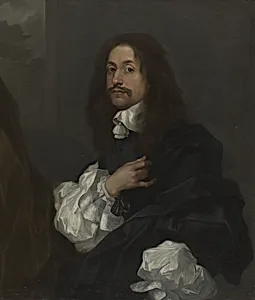
Sébastien Bourdon (1616–1671) was a French Baroque painter of remarkable versatility and restless ambition, whose career carried him from the workshops of Paris to the courts of Rome and Stockholm before he returned to France to become a founding member of one of Europe's most important artistic institutions. Born on 2 February 1616 in Montpellier into a Protestant family, Bourdon was apprenticed to a painter in Paris at the age of seven, but left at fourteen and traveled through Bordeaux and Toulouse. His passage through the military was brief — an officer recognized his talent, secured his discharge, and in 1634 financed his journey to Rome, where he would spend the formative years of his training.
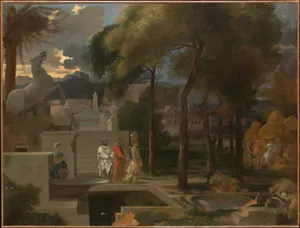
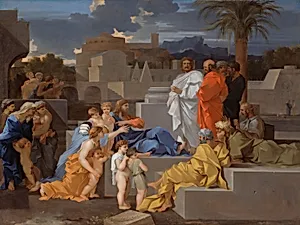
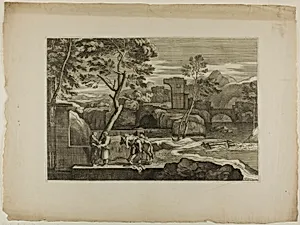
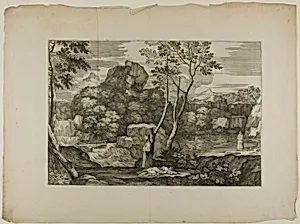
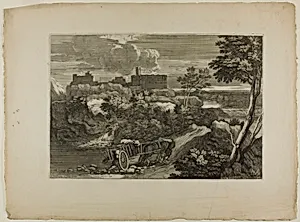
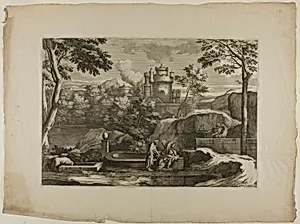
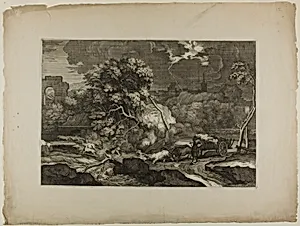
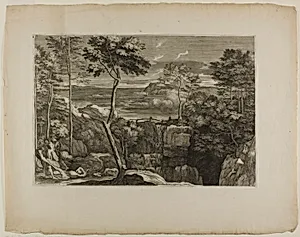
In Rome, Bourdon absorbed the lessons of Nicolas Poussin, Claude Lorrain, and Caravaggio, and also produced works in a Dutch genre manner that sold readily on the open market. In 1638, fearing denunciation by the Inquisition on account of his Protestant faith, he was forced to flee Rome and return to France. Back in Paris, he built a distinguished reputation as a portraitist, history painter, and landscapist, working in styles so varied — encompassing the manner of Rubens, the intimacy of Flemish genre painting, and the classical landscape idiom of Gaspar Dughet — that critics have noted the absence of a single, immediately recognizable 'Bourdon style.' This eclecticism, simultaneously his greatest strength and his critical liability, also made him an exceptionally responsive painter for diverse patrons.
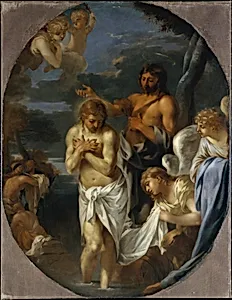
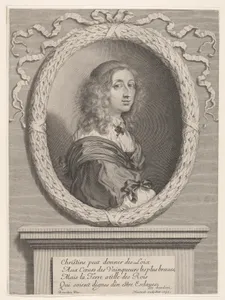
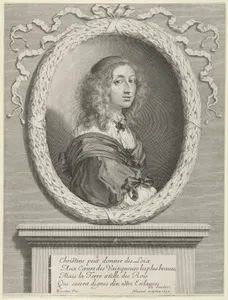
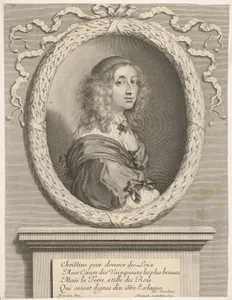
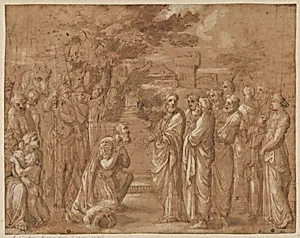
In 1648, Bourdon was one of the founders of the French Royal Academy of Painting and Sculpture, serving as an original elder. Four years later, Queen Christina of Sweden appointed him her first court painter in Stockholm, a prestigious position he held until her abdication in 1654, after which he returned permanently to Paris. His most ambitious surviving work is The Crucifixion of St. Peter, painted for Notre Dame cathedral; other major works include The Fall of Simon Magnus (1657) for the cathedral of Montpellier.
Bourdon died in Paris on 8 May 1671. Long undervalued as a mere imitator, his reputation has been substantially revised, with a major retrospective at the Musée Fabre in Montpellier in 2000 helping to establish his rightful place among the leading French painters of the seventeenth century.