Ctrl K
1695–1796
**Sébastien Igonet** (c. 1695–1796) was a distinguished Parisian silversmith whose elegant creations exemplify the refined luxury of eighteenth-century French metalwork. Active in Paris during the height of the Rococo period, he earned his master’s mark in 1725 and continued working at least until the 1760s, producing objects that combined technical precision with playful ornament.
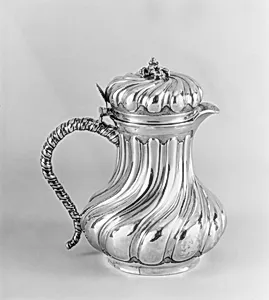
Little is documented about his early training or family background, yet his assured craftsmanship suggests a solid apprenticeship within the vibrant guild system of the French capital. Igonet specialized in domestic silver, favoring the swirling lines, asymmetry, and naturalistic motifs characteristic of Rococo design. His pieces often featured inventive details such as rope-twisted handles or fruit-shaped finials that delighted the eye while serving practical purposes.
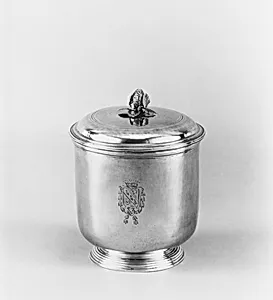
Among his most notable surviving works are a Marabout coffeepot of 1738–39, now in the Metropolitan Museum of Art, celebrated for its dynamic contours and unusual handle, and a lidded sugar bowl dated 1753–54, also at the Met, whose strawberry finial playfully nods to its contents. He also contributed silver elements to elaborate toilet services, including pieces for the Duchesse de Cadaval and other aristocratic patrons.
Igonet’s legacy endures through these refined objects that capture the exuberance and sophistication of Parisian silverwork in the age of Louis XV. Though few biographical details survive, his documented output demonstrates a master craftsman whose creations continue to embody the graceful spirit of eighteenth-century French decorative arts.