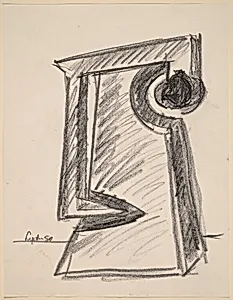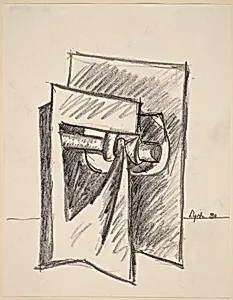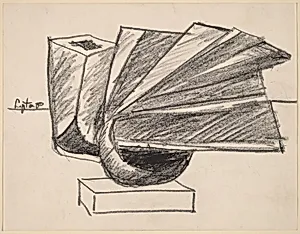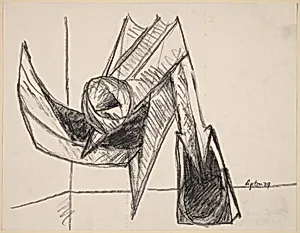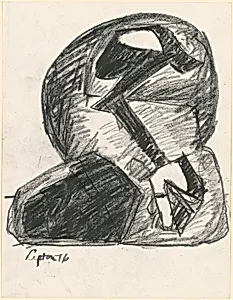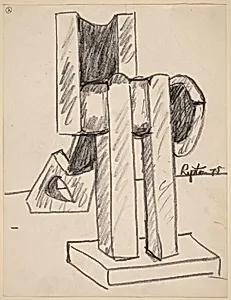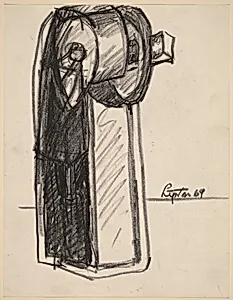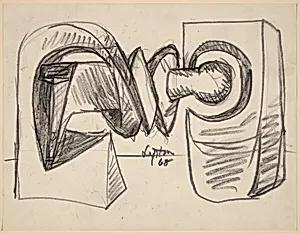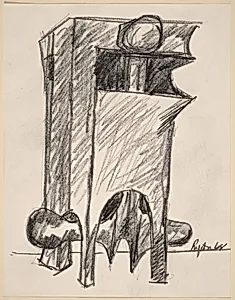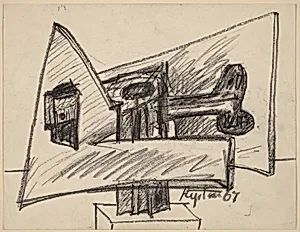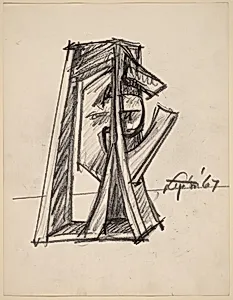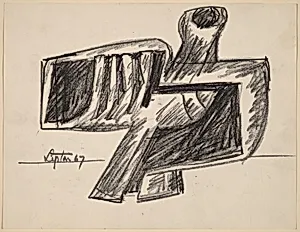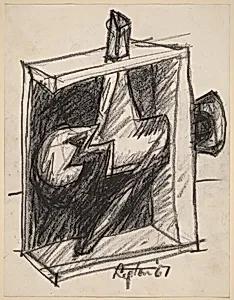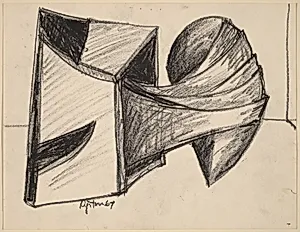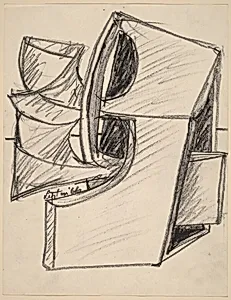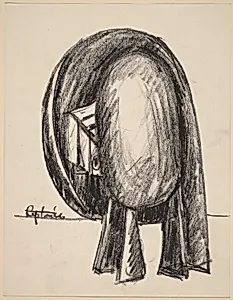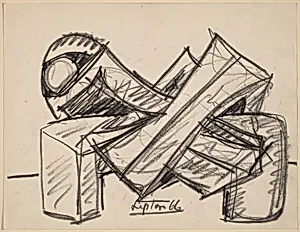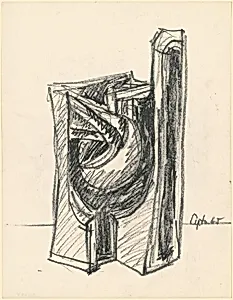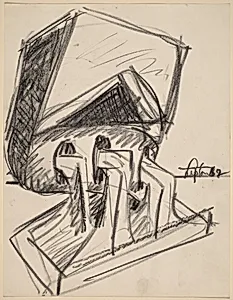
Seymour Lipton (1903–1986) was born in New York City to a candy-store owner and grew up in the Bronx, where his early fascination with art and nature took root amid tenement life near farmland. Sketching from age 12 and active in his high school art club, Lipton initially heeded his parents' wishes by pursuing dentistry. He attended City College briefly, then earned a Doctor of Dental Surgery from Columbia University in 1927, practicing successfully until 1932. Self-taught with no formal art training, he began carving wood sculptures in his spare time, drawing on his dentist's manual precision for direct-carve techniques that yielded semi-abstract forms evoking Depression-era struggles.
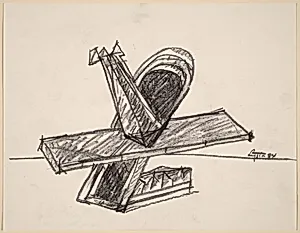
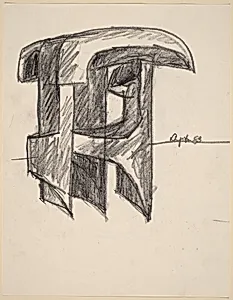
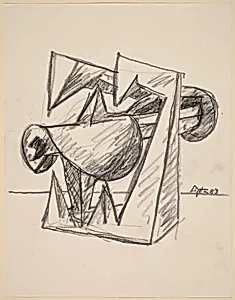
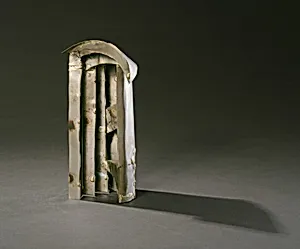
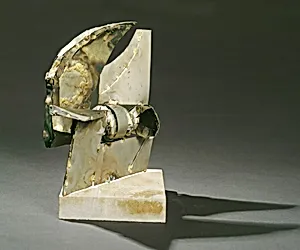
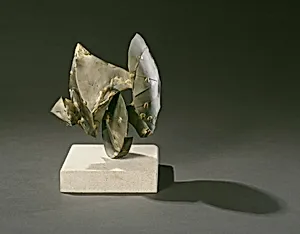
Transitioning fully to art, Lipton experimented with bronze around 1940–41 before wartime metal shortages pushed him toward scrap sheets; postwar horrors like genocide and nuclear devastation deepened his somber themes of human fragility and rebirth. By 1951, he pioneered techniques with industrial Monel metal sheets—heating, bending, and brazing them with nickel-silver rods for rust-resistant, textured abstractions that twist and curve like frozen organic forces. Worked in the Abstract Expressionist tradition of the New York School, his biomorphic sculptures balanced internal voids and external shells, influenced by Henry Moore's organics and contemporaries like David Smith, while addressing flight, nature, war, and psychological tension. He taught sculpture at the New School for Social Research (1940–1965) and Cooper Union, shaping a generation.
Lipton's international acclaim peaked in the 1950s with works like *Night Bloom* (1951, nickel-silver on steel), *Sea King* (1955), *Pioneer* (1957, from his *Hero* series inspired by Joseph Campbell), and *Winter Solstice #2* (1957, Hirshhorn Museum). Major commissions included *Archangel* (1964, Philharmonic Hall, Lincoln Center) and pieces for Dulles International Airport, plus public sculptures like *Laureate* (Milwaukee) and *The Empty Room* (Albany). Representing the U.S. at the 1958 Venice Biennale and featured in the 1956 *12 Americans* exhibition, his oeuvre graces the Whitney, MoMA, Smithsonian American Art Museum, and more—over 50 works preserved in key collections today, cementing his legacy as a vital force in American modernist sculpture.