Ctrl K
1637–1724
Sigismondo Caula was born on 24 May 1637 in Modena to Sebastiano and Maddalena. He studied under the French painter Jean Boulanger, becoming one of his pupils alongside Tommaso Costa and others; he even witnessed Boulanger’s will in 1660. After this formative period he traveled to Venice, where he completed his education by studying the great sixteenth-century masters, especially Titian, Tintoretto and Veronese. He then returned permanently to Modena, remaining active there until his death./)
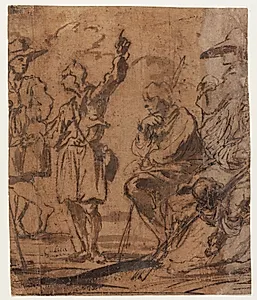
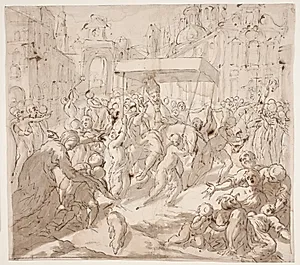
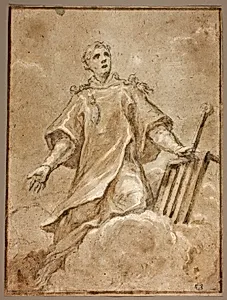
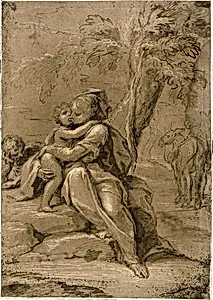
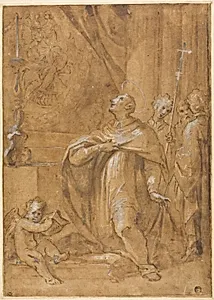
Working in the Baroque tradition, Caula developed a distinctive style that combined the solid, elegant figural structure inherited from Boulanger with the luminous colour, dramatic lighting and spacious architectural settings of Venetian painting. He was equally accomplished as a sculptor, producing figures in clay, plaster and stucco, and became one of Modena’s most sought-after decorators of church vaults and ceilings. His compositions typically feature gracefully posed figures set against grand architectural backdrops, conveying both monumentality and fluid movement.
Among his most celebrated works is the large canvas of St Charles Borromeo administering the sacrament to plague victims, painted around 1670 for the church of San Carlo and now in the Galleria Estense; the same museum holds his Miracle of Sant’Ambrogio. He contributed frescoes to the vault of San Vincenzo (1671), the dome of the sanctuary of the Beata Vergine at Fiorano (1682, of which the prophets in the pendentives survive), and the vault of San Barnaba (completed 1708). He also executed numerous altarpieces and decorative cycles for local churches and confraternities, some of which are now lost, and served as a court painter to the Este dukes.
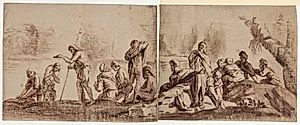
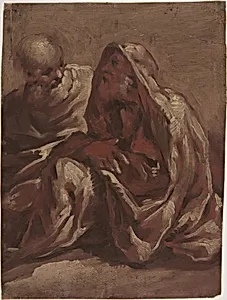
In his later years Caula’s colouring grew somewhat more subdued, yet he continued to receive important commissions. From 1700 to 1703 he taught Francesco Monti. Caula died in Modena in July 1724 at the age of eighty-seven. His surviving paintings and drawings, together with the frescoes that still adorn Modenese churches, secure his place as a leading figure of late-Baroque art in Emilia.