Ctrl K
1735–1800
**Simon Julien (1735–1800)** was a French painter, draughtsman, and etcher born in Toulon. He began his artistic training in his native city and at the emerging academic school in Marseille before moving to Paris. There he studied at the École des Beaux-Arts under Carle van Loo starting in 1758 and also followed the instruction of Michel-François Dandré-Bardon at the Académie Royale.
Julien achieved early success by winning the Grand Prix de peinture in 1760. He spent 1763–1771 as a pensionnaire at the French Academy in Rome. Upon returning to Paris in 1771, he undertook significant decorative commissions for sites including the hôtel du Garde-Meuble, the hôtel of Princess Kinski, and the choir of the abbey of Anchin, while also working as an engraver. He trained pupils such as Jacques Réattu and Jean-Baptiste Mallet and was the uncle and teacher of the engraver Joseph-Toussaint.
His style retained elegant qualities from his early masters and favored sentimental iconography, even as neoclassicism rose to prominence. Agréé by the Académie Royale in 1783, he exhibited regularly at the Salons. His reception piece was nevertheless rejected in 1789. He died in poverty in Paris in February 1800.
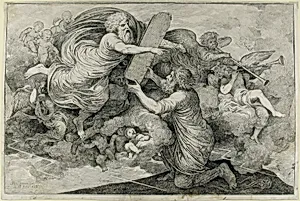
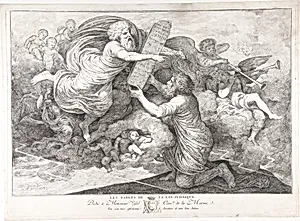
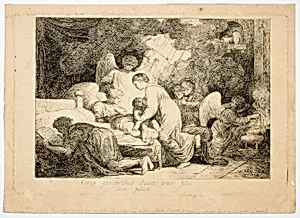
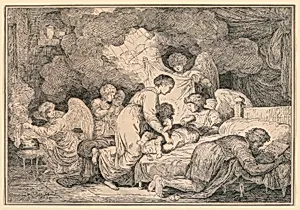
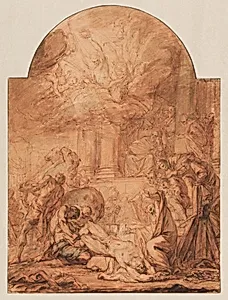
Among his documented works are *The Holy Family Served by Angels* (1773), *Moses on Sinai* (etching, 1773), and *The Death of Virginia*. Contemporary descriptions portray him as an imaginative, fantastical, and witty artist with a skilled sense of color. His career illustrates the transition from late Baroque and Rococo influences toward the stricter neoclassical ideals that ultimately overshadowed his reception.