
Ctrl K
1771–1793
**Simon Petrus Conrad (active 1771–1793)**
Simon Petrus Conrad was a distinguished silversmith based in Nagyszeben (modern-day Sibiu, Romania), a vibrant center of Transylvanian craftsmanship within the Kingdom of Hungary during the late 18th century. He attained master status in 1771 and operated a workshop there until 1793, producing exquisite silver objects that exemplify the region's rich goldsmithing tradition. Little is known about his early life or formal training, as records from this period focus primarily on guild achievements rather than personal backgrounds. Nonetheless, Conrad's work reflects the technical mastery and imaginative flair typical of Transylvanian silversmiths, who blended local motifs with broader European influences amid the Saxon community's enduring guild structures.
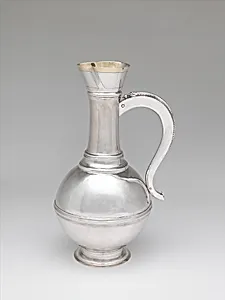
Conrad's surviving oeuvre is sparse, underscoring the fragility of decorative arts from this era, yet his known pieces demonstrate exceptional skill in silver manipulation. His masterpiece is a parcel-gilt silver wine decanter, dated around 1780 (or circa 1789 in some references), now in the Metropolitan Museum of Art. Measuring 13⅞ x 4 inches, this vessel features a harmonious, restrained form enhanced by gilded accents. A sculpted snake coils around the scroll handle, clutching an apple in its mouth—a clever allegory of temptation warning against excess in mulled wine service. The embossed surface and fluid lines highlight Conrad's ability to elevate functional silver into sculptural art, marked with his initials "SPC."
Fewer than a dozen similar decanters survive, including related examples in the Salgo Collection and the Liechtenstein princely holdings in Vienna, affirming Conrad's place in a select lineage of Nagyszeben goldsmiths. His workshop contributed to the late Baroque-to-Rococo transition in Transylvanian metalwork, where guild-regulated innovation met symbolic depth. Though his career was brief—spanning just over two decades—Conrad's legacy endures in museum treasures, illuminating the cultural crossroads of Hungarian Transylvania and the artistry of its unsung masters.