Ctrl K
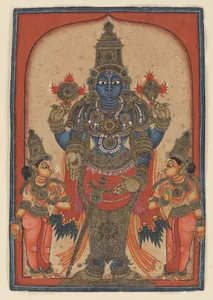
**Tirupati School, South India** emerged as a distinctive regional tradition of devotional painting centered in Tirupati, Andhra Pradesh. Active primarily from the 13th century through the late 1800s, the school specialized in images of Lord Balaji (Venkateswara), the form of Vishnu revered at the famous hilltop temple. Artists working in this tradition produced portable devotional works that captured the deity in various poses, frequently accompanied by consorts such as Lakshmi and Padmavathi or by worshippers, reflecting the intense pilgrimage culture surrounding the Tirupati shrine.
The style emphasizes rich color, intricate detailing, and a sense of divine presence suited to both temple use and private devotion. While some later examples incorporate gilded and gem-set techniques reminiscent of related South Indian schools, the core output includes opaque watercolor paintings on paper, as seen in surviving 18th-century works. These pieces blend local iconographic conventions with refined brushwork to convey the deity’s protective and auspicious qualities.
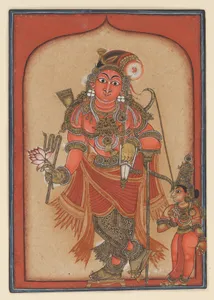
Notable examples include a late-18th-century painting of Vishnu as Venkateshvara, Lord of Tirupati, now in the Metropolitan Museum of Art, which shows the bejeweled deity with consorts in opaque watercolor and hand-colored silver on paper. A companion work depicts Krishna as Rajagopalaswamy, king of the cowherds, in the same delicate format. Such paintings highlight the school’s focus on Vishnu’s multiple manifestations.
The Tirupati School’s legacy endures in its contribution to South Indian religious art, where its devotional imagery continues to inspire both worship and collecting. Today, institutions such as the Sri Venkateswara Institute of Traditional Sculpture and Architecture in Tirupati preserve and teach related traditional painting techniques, ensuring the continuation of this regional heritage alongside other Andhra art forms.