Ctrl K
1835–1919
Suzuki Shin'ichi (1835–1919) was a Japanese photographer who worked during a period of extraordinary transformation in both Japanese society and the history of the photographic medium. Active during the Meiji era, when Japan was engaged in a sweeping process of modernization and opening to the world, Suzuki belonged to the generation of early Japanese photographers who helped define what photography could mean in a country encountering the medium for the first time and adapting it to Japanese subjects and aesthetic sensibilities.
Photography arrived in Japan in the late 1840s and 1850s, and the decades that followed saw the rapid development of a commercial and artistic photographic culture serving both Japanese patrons and the growing numbers of foreign visitors eager for images of an exotic and rapidly changing land. Photographers of Suzuki's generation produced portraits, documentary records of traditional crafts and landscapes, and elaborately hand-colored images of geisha, samurai, and scenic views that became prized souvenirs and objects of artistic interest in both Japan and the West.
Suzuki worked within this context, producing photographs that documented Japanese life, people, and landscapes during one of the most turbulent and consequential periods in the nation's history. His long career, spanning from the mid-Meiji era into the Taisho period, allowed him to witness and record the dramatic changes sweeping Japanese society from the adoption of Western dress and customs to the transformation of urban environments.
As a practitioner of early Japanese photography, Suzuki Shin'ichi occupies a place in the history of the medium that connects the careful documentation of a changing world with the aesthetic traditions of a culture with a rich visual heritage. His photographs remain valuable both as historical documents and as works of visual art.
![[Japanese Woman in Traditional Dress]](https://images.artheonmuseum.org/met/ph/thumb/japanese-woman-in-traditional-dress-288507.webp)
![[Two Japanese Women in Traditional Dress with Fan and Screen]](https://images.artheonmuseum.org/met/ph/thumb/two-japanese-women-in-traditional-dress-with-fan-and-screen-288513.webp)
![[Young Japanese Woman]](https://images.artheonmuseum.org/met/ph/thumb/young-japanese-woman-288478.webp)
![[Japanese Women in Traditional Dress]](https://images.artheonmuseum.org/met/ph/thumb/japanese-women-in-traditional-dress-288502.webp)
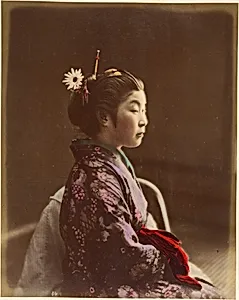
![[Japanese Woman in Traditional Dress Posing Outdoors]](https://images.artheonmuseum.org/met/ph/thumb/japanese-woman-in-traditional-dress-posing-outdoors-288527.webp)
![[Japanese Woman in Traditional Dress Posing with Cat and Instrument]](https://images.artheonmuseum.org/met/ph/thumb/japanese-woman-in-traditional-dress-posing-with-cat-and-instrument-288526.webp)
![[Japanese Woman in Traditional Dress Posing with a Child on her Back]](https://images.artheonmuseum.org/met/ph/thumb/japanese-woman-in-traditional-dress-posing-with-a-child-on-her-back-288524.webp)
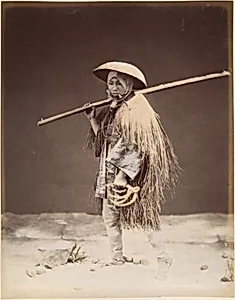
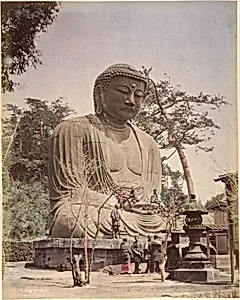
![[Landscape with Buddha Sculpture]](https://images.artheonmuseum.org/met/ph/thumb/landscape-with-buddha-sculpture-288549.webp)
![[Japanese Woman in Carriage]](https://images.artheonmuseum.org/met/ph/thumb/japanese-woman-in-carriage-288548.webp)
![[Two Japanese Women Posing with Fans]](https://images.artheonmuseum.org/met/ph/thumb/two-japanese-women-posing-with-fans-288522.webp)
![[Two Japanese Men in Traditional Dress]](https://images.artheonmuseum.org/met/ph/thumb/two-japanese-men-in-traditional-dress-288530.webp)
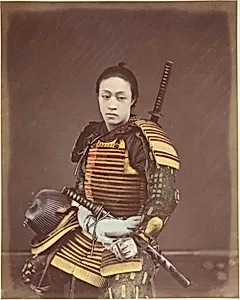
![[Japanese Women in Traditional Dress]](https://images.artheonmuseum.org/met/ph/thumb/japanese-women-in-traditional-dress-288505.webp)
![Osaki Kioto [illegible] dancer](https://images.artheonmuseum.org/met/ph/thumb/osaki-kioto-illegible-dancer-288509.webp)
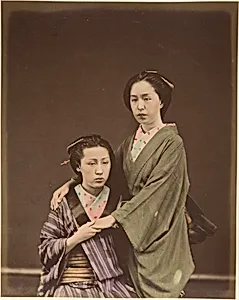
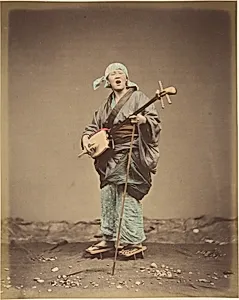
![[Two Japanese Women in Traditional Dress]](https://images.artheonmuseum.org/met/ph/thumb/two-japanese-women-in-traditional-dress-288511.webp)
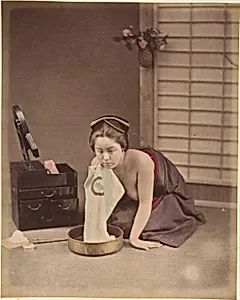
![[Japanese Man Preparing a Fish]](https://images.artheonmuseum.org/met/ph/thumb/japanese-man-preparing-a-fish-288514.webp)