Ctrl K
1849–1918
**Suzuki Shōnen (鈴木松年, 1848–1918)** was a prominent Kyoto-based Nihonga painter of the Meiji period, renowned for his dynamic landscapes, pine tree compositions, and figural works. Born in Kyoto as the son of the painter Suzuki Hyakunen, he inherited his father’s studio and reputation. Hyakunen had founded the Suzuki school and worked in the Shijō and Nanga styles; Shōnen continued and expanded this family legacy as a professional artist.
Shōnen trained within the family tradition and rose to prominence in Kyoto’s art world. In 1881 he became head of the northern division (or professor) at the Kyoto Prefecture Painting School, where he helped shape the next generation of painters. He is notably remembered as the first teacher of the celebrated artist Uemura Shōen. His career flourished through participation in major domestic and international exhibitions, where he earned awards; highlights include the World’s Columbian Exposition in Chicago and the Paris Exposition Universelle of 1900.
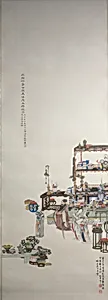
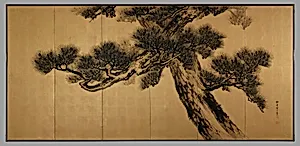
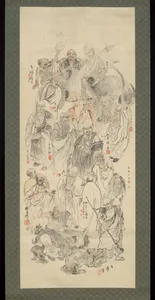
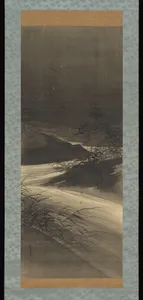
Stylistically, Shōnen excelled in ink painting with subtle color accents, often depicting aged pines, landscapes, birds and flowers, and narrative or figural scenes. Representative works include the hanging scroll *Su Dongpo Laughing* (1892), the pair of six-panel screens *Aged Pines* (late 19th century), and *Immortals* (1880s). He also contributed to collaborative projects and illustrated books documenting Kyoto’s scenic spots.
Shōnen’s legacy endures as one of Kyoto’s leading Meiji-era painters who bridged traditional Japanese styles with the evolving Nihonga movement. Through his teaching, institutional roles, and exhibition successes, he helped sustain and modernize Kyoto’s painting traditions into the early twentieth century, influencing both contemporaries and later artists.