Ctrl K
**The Telephos Painter** was an anonymous Athenian red-figure vase-painter active circa 470–460 BCE. His conventional name, assigned by the scholar J.D. Beazley, derives from a distinctive cup now in the Museum of Fine Arts, Boston (98.931), that depicts the mythological hero Telephos at the palace of Agamemnon. Like most Attic vase-painters of the Classical period, his personal identity remains unknown, yet consistent stylistic traits across surviving works confirm him as a distinct artistic personality.
Working firmly within the red-figure technique that dominated Athenian pottery in the early Classical era, the Telephos Painter favored the kylix (drinking cup) as his primary shape while also decorating phialai, neck-amphorae, lekythoi, and even rhyta in the form of a donkey’s head. His compositions often feature lively scenes of the symposium and komos (revelry), along with satyrs, athletes, warriors, the divine pair Eos and Tithonos, and episodes from the Ilioupersis (the fall of Troy). These subjects reflect both the convivial culture of contemporary Athens and the enduring appeal of epic narrative on fine tableware exported across the Mediterranean.
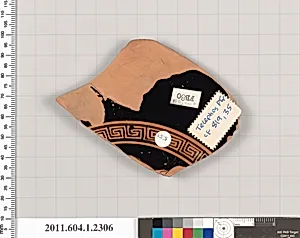
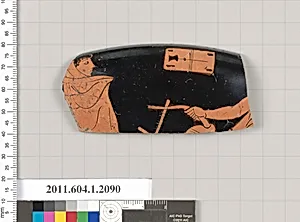
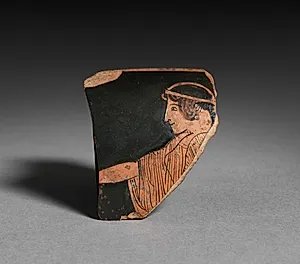
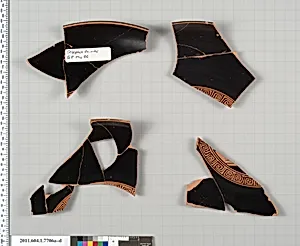
Although no teacher or workshop affiliation is recorded, the painter’s precise drawing and balanced figure compositions place him among the accomplished red-figure artists of the second quarter of the fifth century. Several additional cups and fragments have been attributed to his hand on stylistic grounds, including pieces excavated at sites in Etruria (Orvieto, Vulci, Tarquinia), southern Italy, Sicily, Eretria, Athens, and Rhodes. These wide find-spots underscore the international demand for Attic pottery during this period.
The Telephos Painter’s legacy rests on Beazley’s pioneering attributions, which continue to shape our understanding of mid-fifth-century vase-painting. His works, now dispersed among major museum collections (including eleven pieces referenced in one institutional holding), offer valuable insight into both mythological storytelling and everyday Athenian social life rendered with elegance and clarity.