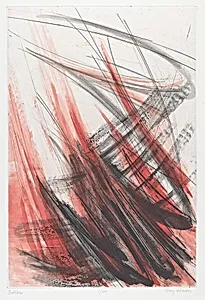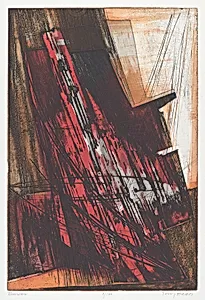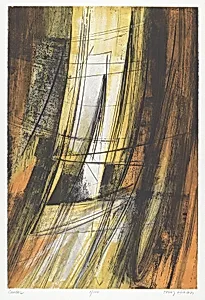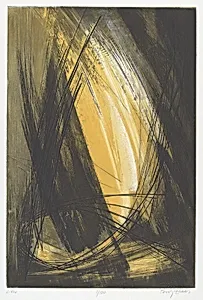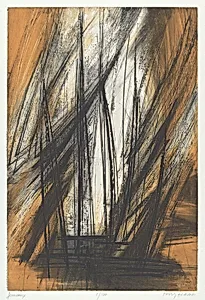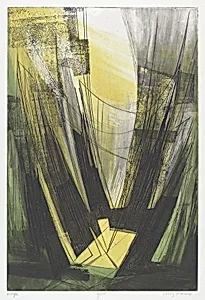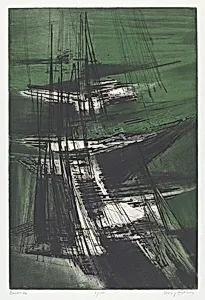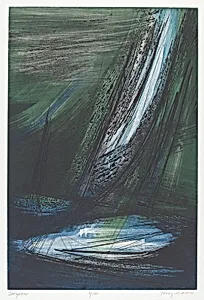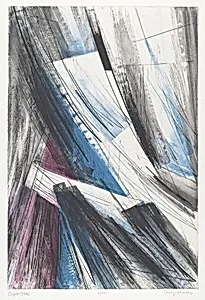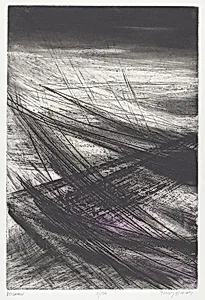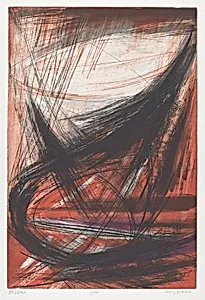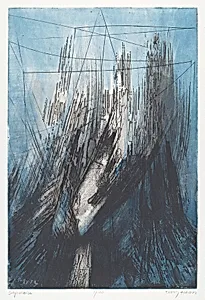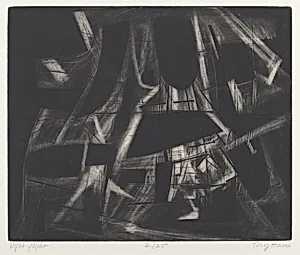
Terry Haass (1923–2016) was a Czech-born French printmaker and painter who became one of the most technically accomplished and poetically inventive graphic artists working in postwar Paris. Born in Prague, she experienced the upheavals of the Second World War before ultimately settling in France, where she built a long and distinguished career at the center of the international printmaking community. Paris in the postwar decades was a hub of extraordinary activity in the graphic arts, and Haass became a leading figure in that milieu, celebrated for her mastery of multiple intaglio techniques.
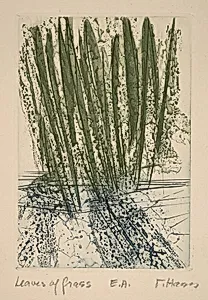
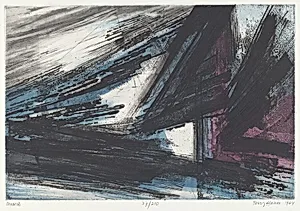
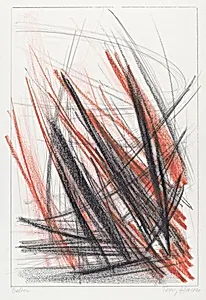
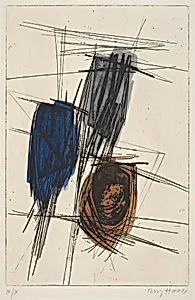
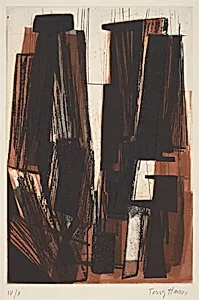
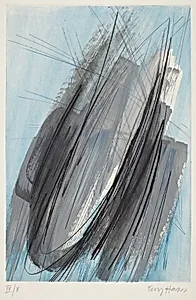
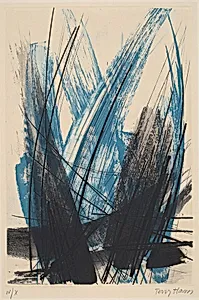
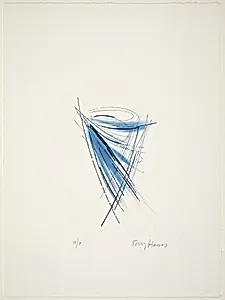
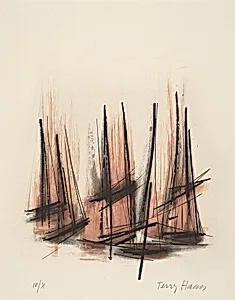
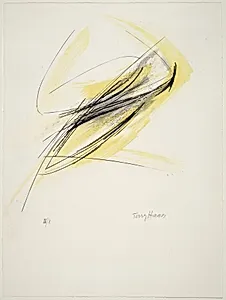
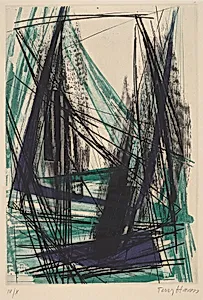
Haass worked primarily in etching, aquatint, and engraving, often combining these processes to achieve surfaces of remarkable richness and complexity. Her imagery drew on a deeply personal symbolic vocabulary — geometric forms, organic shapes, and abstract configurations that evoke themes of memory, perception, and the inner life. Her prints are neither purely abstract nor figurative but inhabit a space between the two, inviting meditative looking rather than simple reading. The influence of Surrealism and of the European abstract tradition is present in her work, filtered through a sensibility that remained distinctly her own.
Over the course of a career spanning more than six decades, Haass exhibited widely in Europe and North America and received numerous honors for her contributions to the art of printmaking. She was associated with Atelier 17, the legendary Paris workshop established by Stanley William Hayter that served as a gathering point for experimental printmakers from around the world, and her technical command placed her among the foremost practitioners of her generation.
Haass's work is held in major museum collections in France and internationally, and she is regarded as one of the important figures in the history of postwar European printmaking. Her career — which began amid the turmoil of mid-century Europe and extended into the early twenty-first century — represents a remarkable sustained engagement with the expressive possibilities of the printed mark.