
Ctrl K
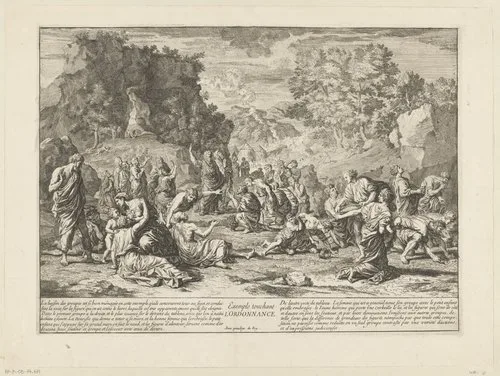
1616–1695
Occupations
Henri Testelin (1616–1695) was a French painter, art theorist, and institutional organizer whose contributions to the Académie Royale de Peinture et de Sculpture proved as significant as his paintings. Born in Paris in 1616 as the son of Gilles Testelin, painter to King Louis XIII, Henri became one of the founding members of the Académie Royale in 1648 and served as its secretary from 1650, playing a crucial role in establishing the theoretical and pedagogical foundations of French academic art training. Testelin's proposal in 1653 that academicians should regularly give lectures (Conférences) on art theory became a cornerstone of the Académie's activities and influenced art education throughout Europe. As a painter, he specialized in portraits of Louis XIV and other court personalities, showing the influence of his close friend Charles Le Brun. However, Testelin's Protestant faith ultimately led to his dismissal from the Académie in 1681 during Louis XIV's increasingly intolerant religious policies, forcing him into exile in Holland, where he died in The Hague in 1695.
Born in Paris in 1616, Henri Testelin was the son of Gilles Testelin, who served as painter to King Louis XIII. This familial connection to the royal court provided Henri with early exposure to courtly artistic culture.
He was the younger brother of the painter Louis Testelin, and the two brothers would work closely together in the early years of the Académie Royale.
During his formative years, Testelin developed a close friendship with Charles Le Brun, who would become the dominant figure in French art under Louis XIV. Le Brun's influence is evident in Testelin's painting style, particularly in his portraits.
In 1648, Henri Testelin became one of the founding members of the Académie Royale de Peinture et de Sculpture, an institution that would transform French art education and establish France's dominance in European academic art.
In 1650, he succeeded his brother Louis as the Académie's secretary, a position of considerable administrative and intellectual importance. He was later nominated professor in 1656.
Testelin's most significant institutional contribution came in 1653, when he suggested that academicians should regularly give lectures (Conférences) on art theory. This practice was adopted and became a cornerstone of the institution's activities, establishing systematic theoretical discourse as central to academic art training.
As a painter, Testelin created portraits of Louis XIV and other important court personalities. His works demonstrate the influence of Charles Le Brun's grand manner and the formal requirements of French court portraiture.
Testelin was given living quarters at the Gobelins Manufactory, the royal tapestry works, for which he produced several cartoons. These were mostly scenes from the life of Alexander the Great and Louis XIV, based on compositions by Le Brun and the battle painter Adam Frans van der Meulen.
In line with the increasingly intolerant religious policies of Louis XIV, which would culminate in the 1685 Revocation of the Edict of Nantes, Testelin was dismissed from the Académie in 1681 because he was a Protestant.
Testelin left France and went into exile in Holland, joining the significant community of French Protestant refugees (Huguenots) who fled religious persecution.
He died in The Hague on April 17, 1695, having spent his final fourteen years in exile from the country and institution to which he had contributed so significantly.
Artheon Research Team
Last updated: 2025-11-09
Biography length: ~492 words
Wikidata (CC0); Getty ULAN (ODC-By)
